
When a steel strip enters a forming line, the way it is shaped can influence much more than the final profile. Tooling requirements, changeover time, production speed, dimensional accuracy and material utilisation can all vary depending on the forming method used.
In the case of manufacturers of square and rectangular hollow sections, there are two specific types of forming process that should be considered: direct forming and conventional forming. The processes are similar in using deformation to create the steel section, but are different in the process of creation of the profile and the tooling involved.
Such knowledge may help in choosing the proper forming process for certain products, volumes and operating conditions.
What Is Conventional Forming?
A flat strip is fed through various stages of roll stands, with each stage having a set manipulation on the strip to form the final desired shape.
In case of hollow profiles, there is gradual forming of a strip into the tubular form, after which there is welding, sizing, and cutting of the hollow profile. The process allows for production of different square and rectangular dimensions through changes in the forming rolls and other tooling components.
It is a very common process that allows for many profile shapes.
Its main characteristics include:
- Progressive forming through multiple roll stands
- Application-specific roll tooling
- Controlled deformation at each stage
- Flexibility for different profile geometries
- Established production methods for a broad range of sections
For manufacturers with diverse product requirements, conventional forming can provide the flexibility needed to handle different shapes, dimensions and material specifications.
What Is Direct Forming?
Direct forming works in a completely different manner compared to the formation of hollow sections.
It does not use only the normal forming process, which is typical to the progressive forming operation.
Instead, the strip is directly formed into the required shape of either the square or rectangular hollow section.
The main aim is to make the forming process as simple as possible while at the same time reducing the number of tooling changes between compatible products.
It can be especially beneficial for companies manufacturing many square and rectangular hollow sections, since tooling changes can influence production continuity.
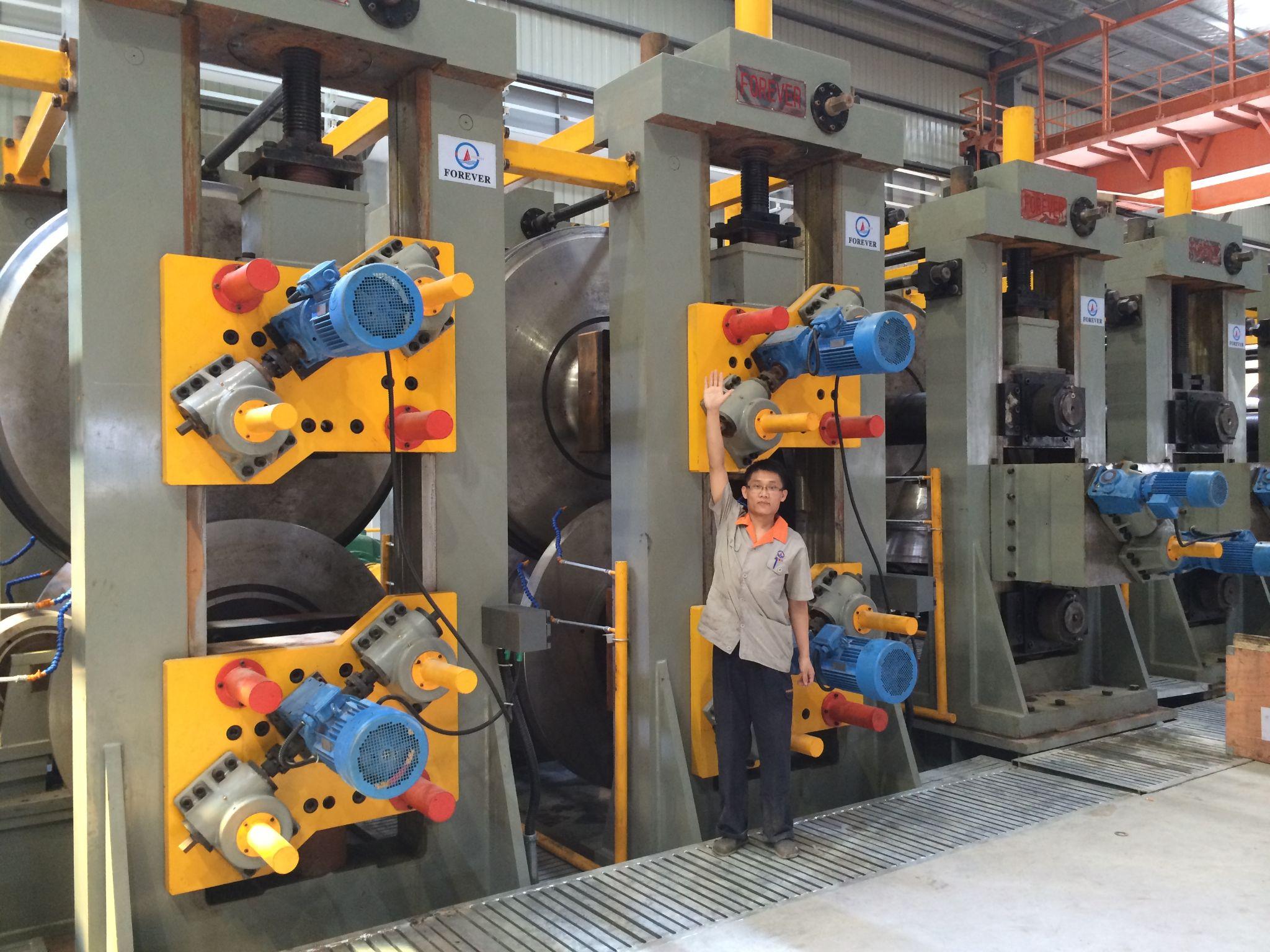
Direct Forming vs Conventional Forming: What Is the Difference?
The main difference lies in the way the profile is developed and how tooling is managed.
| Factor | Direct Forming | Conventional Forming |
|---|---|---|
| Forming approach | Forms the profile more directly | Progressively forms the profile |
| Tooling changes | Can reduce changes between compatible sizes | Often requires size-specific tooling |
| Changeover time | Can be shorter depending on configuration | Can involve additional tooling adjustments |
| Tooling requirements | Can reduce tooling requirements for suitable applications | Multiple roll arrangements may be required |
| Profile range | Particularly suited to square and rectangular hollow sections | Suitable for a broad range of profiles |
| Production efficiency | Can reduce interruptions during size changes | Depends on tooling and setup requirements |
| Automation | Can incorporate digital adjustment systems | Also compatible with automated controls |
| Application | Suitable for specific high-volume product families | Suitable for varied profile requirements |
Neither process is automatically suitable for every application. Profile geometry, steel grade, thickness, dimensions and production volume all influence the appropriate choice.
Key Benefits of Direct Forming
Faster Changeovers
Direct forming has several benefits and one of the benefits that it offers is the possibility of having reduced changeovers when shifting from compatible square and rectangular hollow sections.
This is useful for production situations where several sizes of products need to be produced and therefore reduced changeover can lead to increased efficiency of the machines.
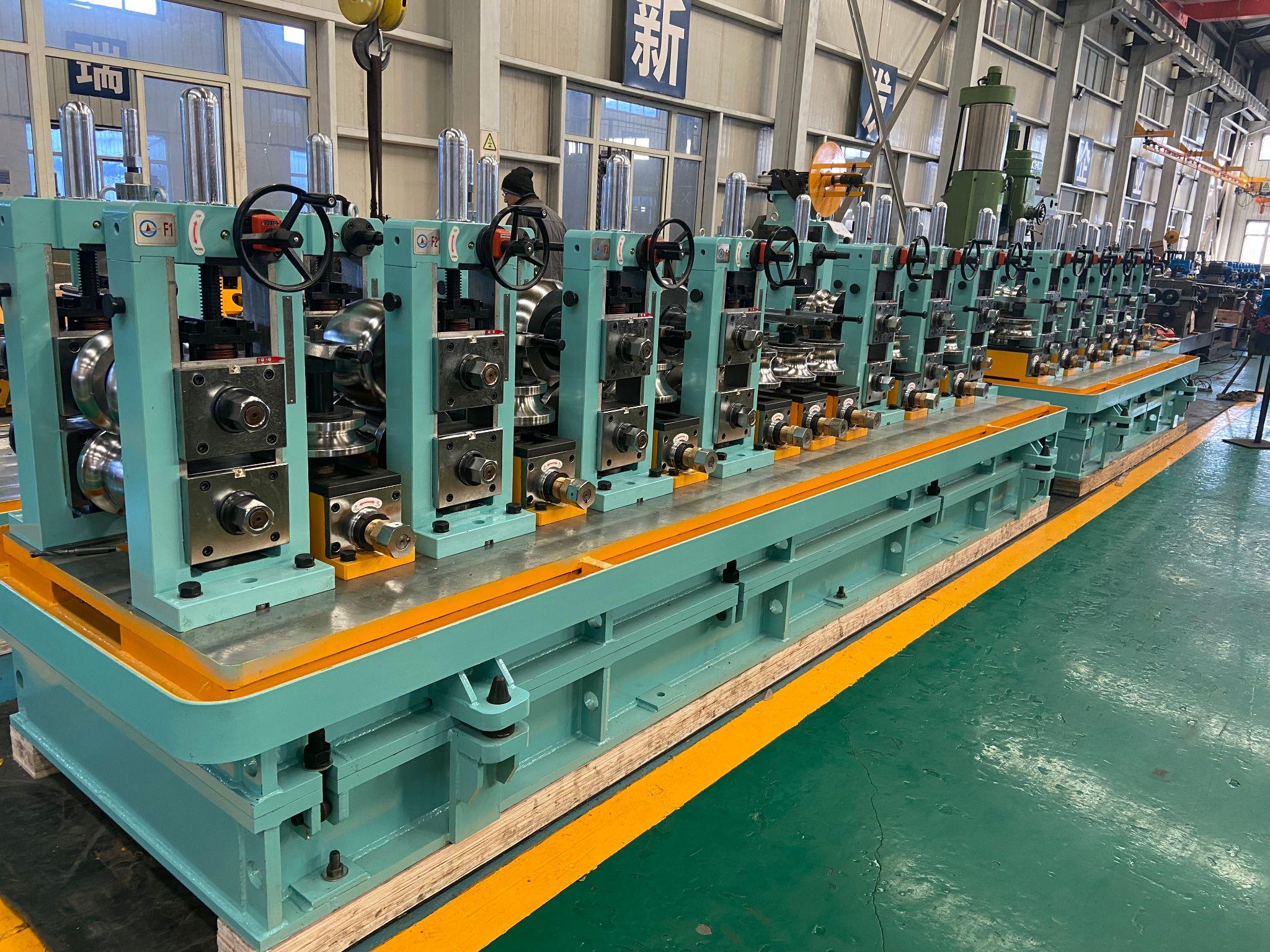
The quick-change cassette concept can aid in achieving this goal since it will make changeovers more efficient if a changeover is necessary.
Reduced Tooling Requirements
Conventional forming may call for separate roll tooling to be developed for each size of the produced items. Based on the situation, direct forming technology can reduce the need for this approach.
This may have implications for the investment in tooling, storage of tooling, and tooling maintenance.
But the real requirement for tooling must be considered in light of the number of products and their size and shape parameters.
Improved Production Continuity
Each change in the tooling or the manual process is an opportunity for downtime. The forming solution that minimizes downtime will enable manufacturers to have a more uninterrupted process.
This is very significant when there is large-scale production as even a small period of downtime can add up to become a large one.
Potentially Lower Operating Costs
Less tooling requirements and reduced changeover periods can lead to lower operating costs. There could also be potential savings from reduced downtime and faster setup processes.
The cost reduction factor, however, will depend upon production quantities, usage of machines, material costs and product variety among others.
Where Conventional Forming Still Fits
Conventional roll forming remains an established solution for many manufacturing applications.
Its progressive approach provides considerable flexibility when manufacturers need to produce different profile geometries or specialised sections.
It can be appropriate when:
- A wide variety of profiles needs to be produced
- Different forming sequences are required for different products
- Profile-specific tooling is acceptable
- Complex cross-sections need controlled progressive deformation
- The product range does not justify a dedicated direct forming solution
The choice therefore should not be based simply on whether direct forming is newer or conventional forming is more established. The forming process needs to match the actual production requirements.
The Role of Digital Roll Adjustment
In modern forming lines, there is an increasing tendency to implement automation in order to increase setup precision and decrease human involvement.
Digital roll adjustment systems may help operators to make adjustments to roll positioning and forming parameters in a controlled manner. This will increase the consistency of setup and minimize the risk of mistakes during manual positioning.
In case of high-production operations, these systems may also provide a more rapid setup between runs.
Digital roll adjustment systems are included in forming machines by Forever Machinery along with quick-change systems that decrease setup time.
Direct Forming for Square and Rectangular Hollow Sections
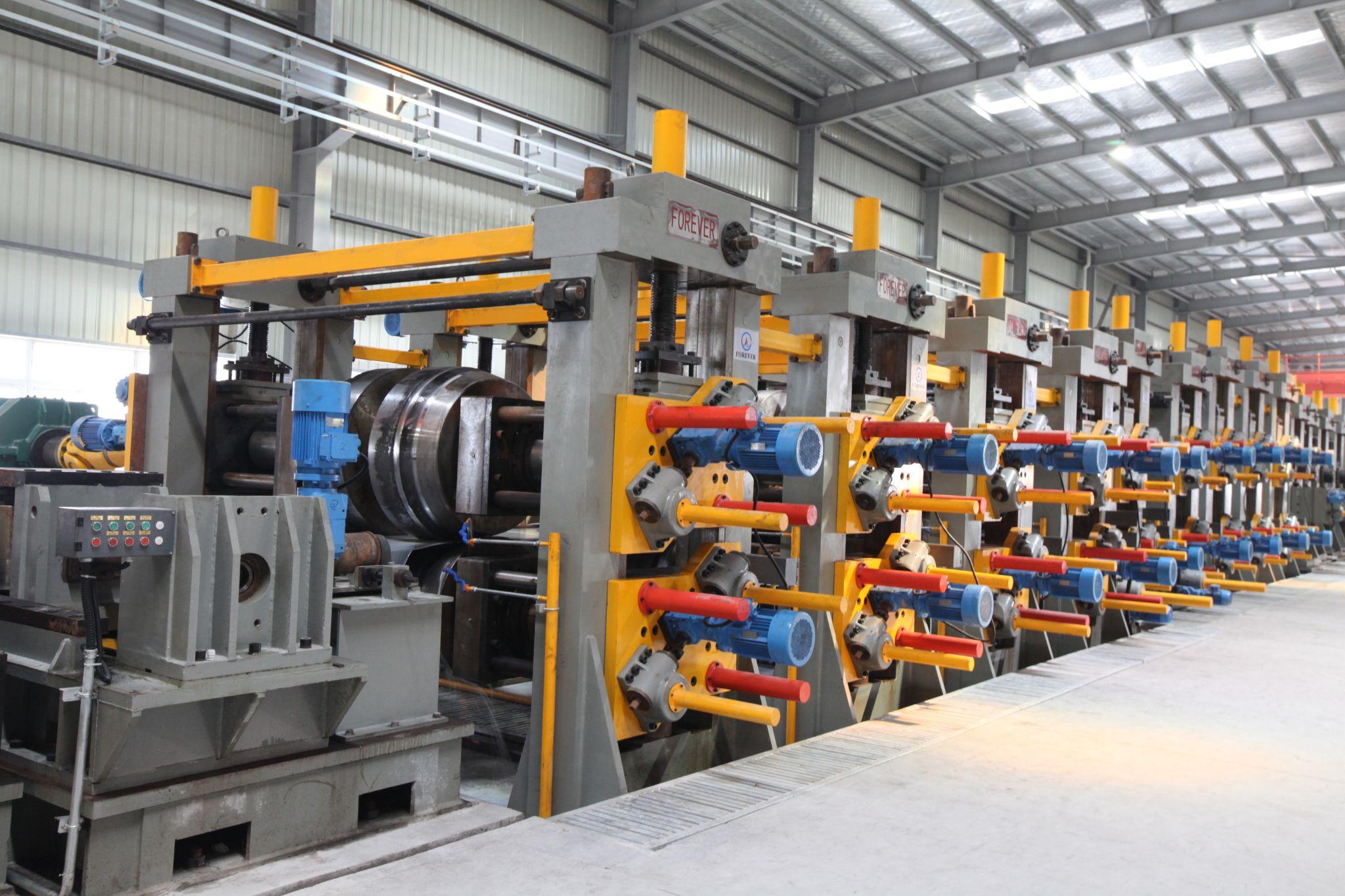
Direct forming is particularly relevant to square and rectangular hollow sections because manufacturers may need to produce several dimensions from the same production line.
Depending on the configuration, modern direct forming lines can cover hollow-section sizes from 80 × 80 mm to 600 × 600 mm.
This type of equipment can offer several potential advantages:
- Reduced roll changes between suitable sizes
- Faster production changeovers
- Lower tooling requirements
- Consistent profile formation
- Better utilisation of production time
Forever Machinery’s 4th-generation direct forming technology is designed around this type of application, allowing square and rectangular sections to be produced without relying on conventional roll changes for every size.
The actual achievable range and production performance depend on the specific line configuration, material grade, wall thickness and product dimensions.
Speed and Precision in Modern Forming Lines
Speed and accuracy are critical factors that should be taken into account while choosing forming equipment. A high-speed line should maintain constant forming, welding, and sizing processes, at the same time preserving accuracy of the produced section within required tolerances. Here automation is helpful as it provides better control over forming processes.
High-Speed Tube Mills from Forever Machinery are capable of reaching production speeds up to 160 m/min with precision up to ±0.05 mm, depending on configuration.
These figures are possible due to precise control over forming processes, steady welding process, and automation processes that maintain consistency during production.
Thus for producers running high-volume production lines, speed, precision, and consistency are beneficial.
These figures are not universal parameters. Actual parameters depend on the diameter, material grade and thickness, type of welding, line configuration, etc.
How to Choose Between Direct and Conventional Forming
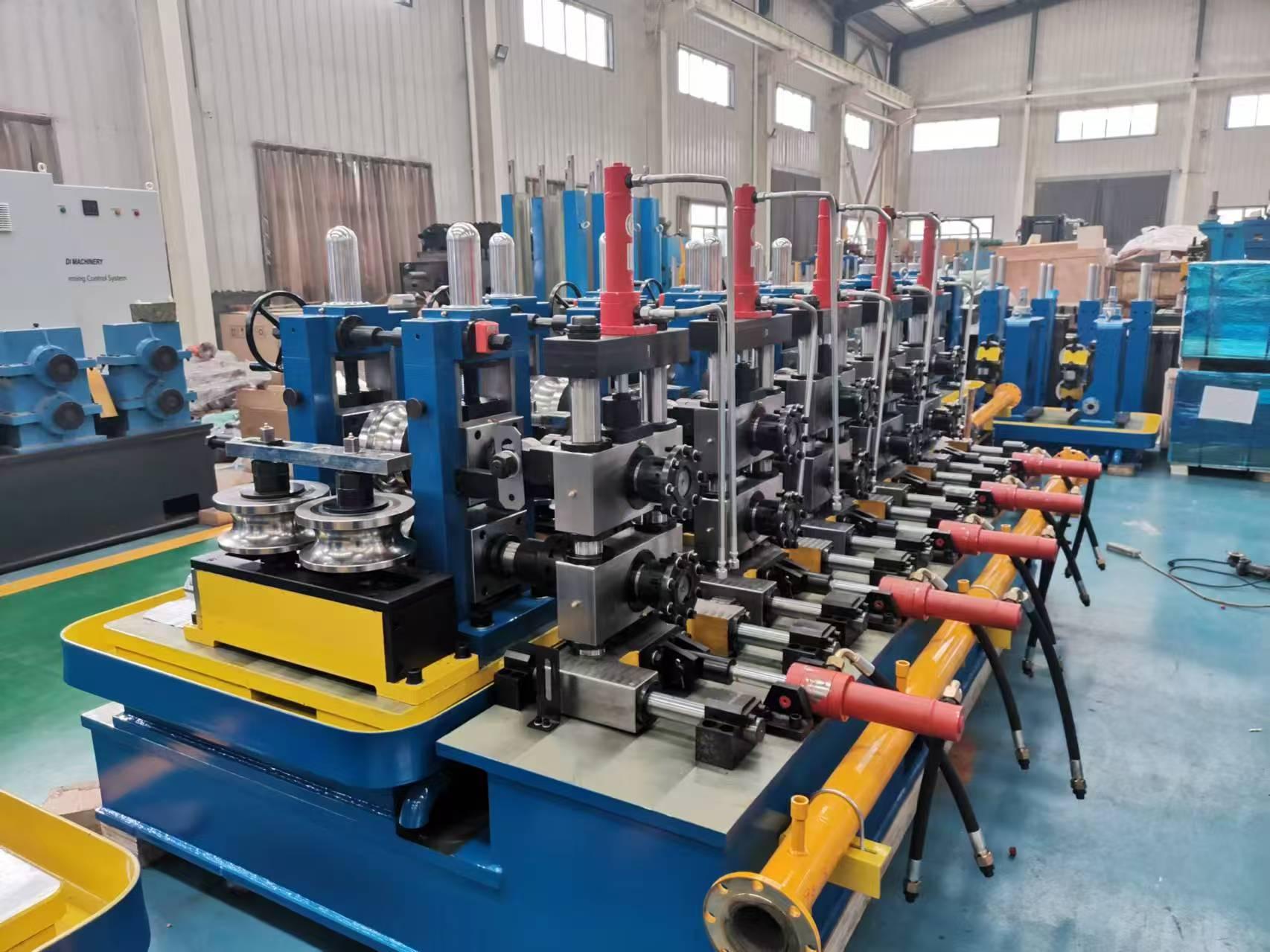
The right forming technology depends on the manufacturer’s specific production environment.
Consider Direct Forming When:
- Square and rectangular hollow sections represent a significant part of production
- Frequent size changes are required
- Reducing roll changes is a priority
- Production downtime needs to be minimised
- A more automated setup is preferred
- Consistent high-volume production is required
Consider Conventional Forming When:
- The product range includes many different profile geometries
- Profile-specific tooling is acceptable
- Complex sections require progressive forming
- Production requirements vary considerably between products
- A flexible, established forming arrangement is required
Other factors such as material grade, strip thickness, corner radius, dimensional tolerance, production volume, line speed and available floor space should also be considered.
Looking Beyond the Forming Process
Forming is only one part of a complete tube or hollow-section production line.
A typical manufacturing process can involve:
Coil Handling → Slitting → Forming → Welding → Sizing → Cutting → Finishing
This implies that the forming machine should be evaluated as a part of the entire manufacturing system and not just as an individual machine.
A manufacturer who has capacities in handling coils, slitting machines, tube forming machines, roll forming and cut-to-length machines will also assist in evaluating how the stages of manufacture interact.
Forever Machinery operates in all these fields and supplies ERW tube mills, direct forming lines, roll forming lines, slitting lines and cut-to-length machines. The company’s range of machinery is backed up by more than 40 years of experience in roll forming engineering and technical services.
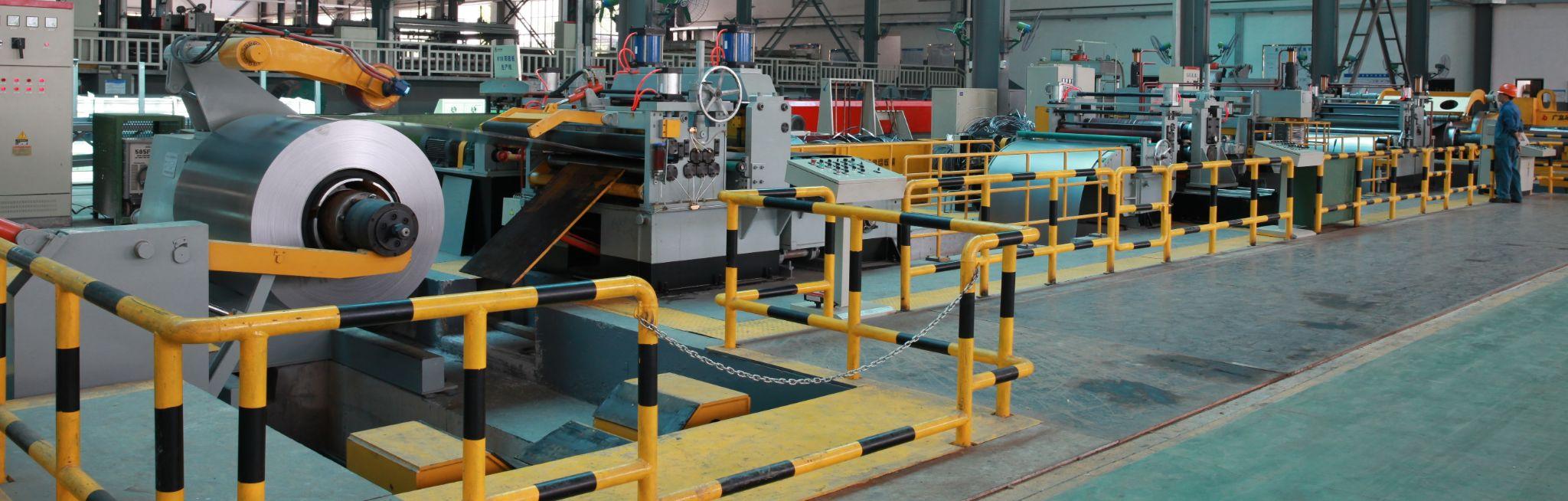
Direct Forming vs Conventional Forming: Making the Right Choice
Direct forming and conventional forming each have a role in modern steel processing. Depending on the specifics of profile geometry, material type, size specifications, volume and other parameters, one of the two may be more suitable.
Manufacturers that are looking to achieve high productivity and manage tooling and changeover times effectively may consider modern direct forming equipment an effective solution in appropriate square and rectangular hollow section manufacturing applications. For those applications requiring maximum flexibility, conventional forming technologies remain relevant today.
As a result of such long years of development and implementation of roll forming solutions including ERW tube mills, direct forming lines, roll forming lines, slitting lines and cut-to-length machinery, Forever Machinery can help you combine modern technologies for different production applications. Their emphasis on precision forming, fast changing, digital adjustment and worldwide technical support will allow you to build your production line around your particular production requirements.
In short, the choice of appropriate forming technology is all about balancing product flexibility, productivity, tooling and accuracy.
Related Reading
- Choosing the Right ERW Tube Mill: A Practical Guide for Manufacturers
- ERW versus Seamless Pipe Manufacturing: Which One Is Appropriate for Your Project?
- How to Increase Tube Mill Productivity: 7 Practical Strategies for Manufacturers
- High Frequency Welding Explained: Process, Benefits and Applications
- Why Saudi Arabia and the UAE Are Driving Demand for ERW Tube Mills