
The ERW tube mill is capable of running at great speeds; however, fast operation alone doesn’t mean that the machine is the proper choice for your production line. Incorrect design will cause changeovers, dimensional inconsistency, expensive tooling costs, downtime, and limited production potential.
So, selection of an ERW tube mill is not only the question of choosing the machine according to the tube diameter or maximum line speed. It should be selected taking into account a whole list of factors such as product variety, material specifications, output, etc.
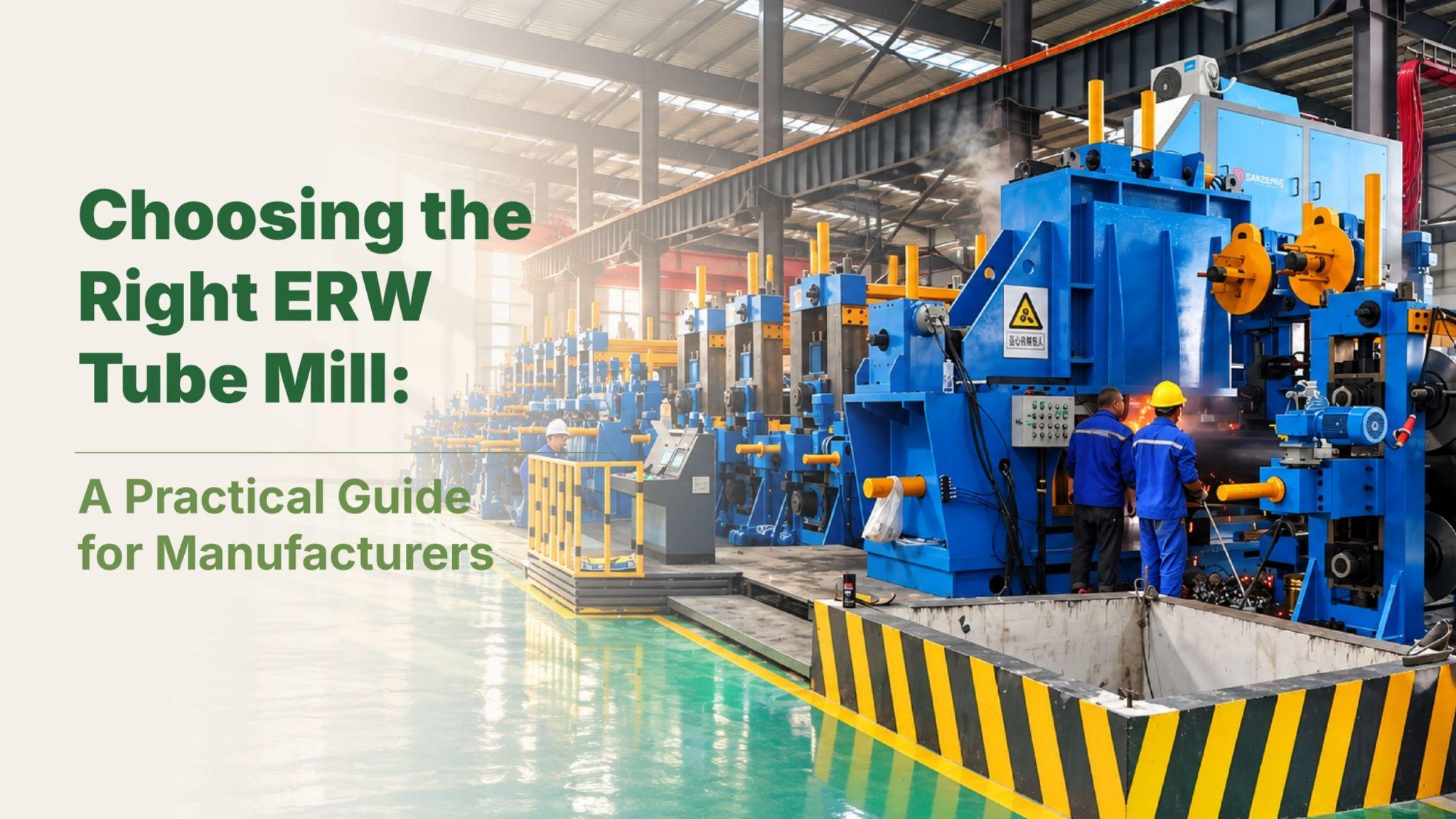
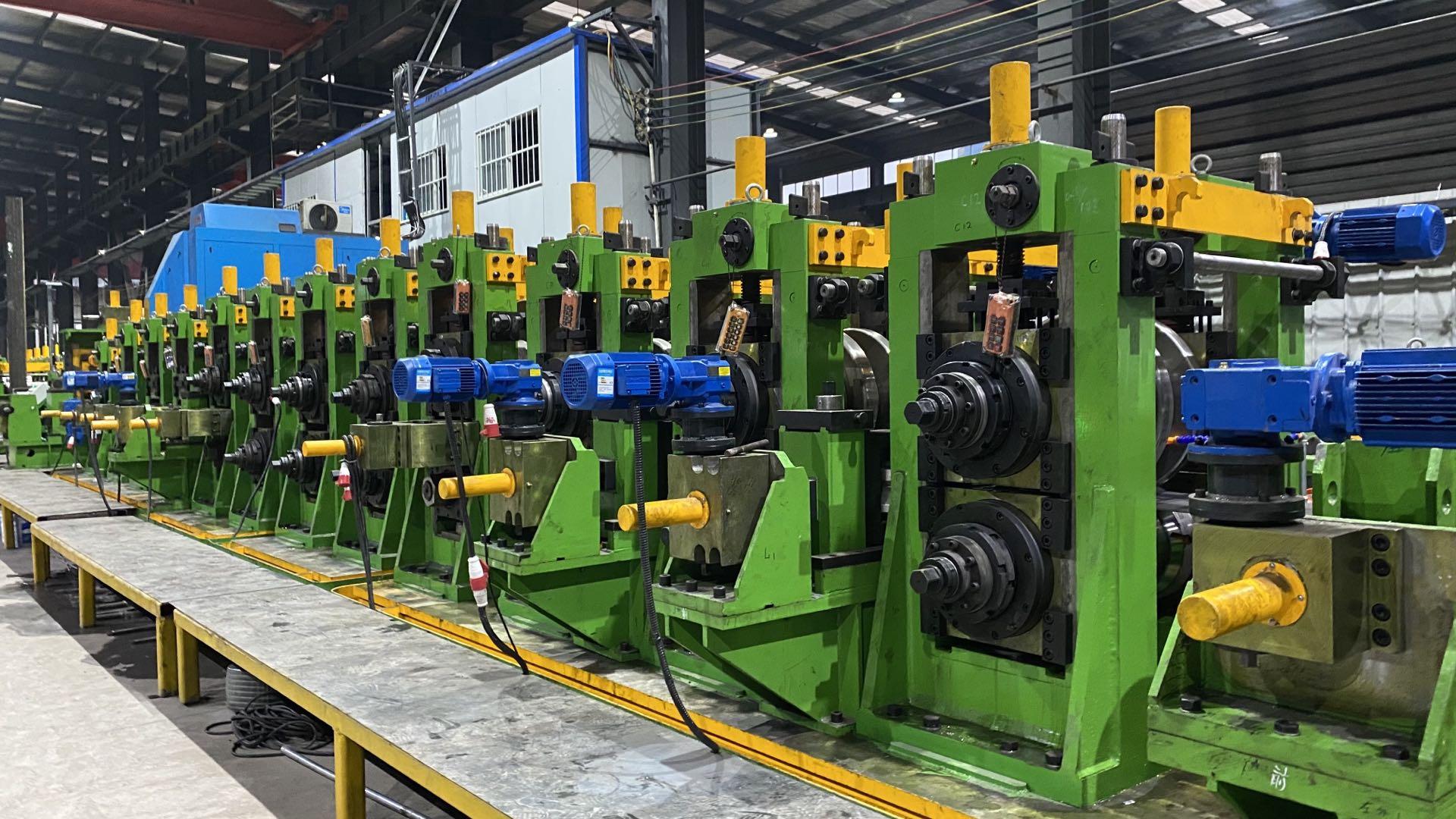
ERW tube mill combines several processes – namely, coil feeding, forming, high-frequency welding, sizing, straightening, and cutting. It is essential that each part should work in interaction with other parts in order to achieve uniformity in production of the tubes at required speed.
There are a number of criteria that affect the choice of ERW tube mill. For example, an ERW tube mill intended for high-volume production of structural tubes requires different characteristics compared to an ERW tube mill used for manufacturing of precision automotive tubes or special tubing.
Therefore, it is necessary to estimate the performance of the entire production line rather than separate machines.
This guide explores the key factors to consider when choosing an ERW tube mill, from product range and production capacity to forming technology, changeover requirements, automation, maintenance, and long-term operating costs.
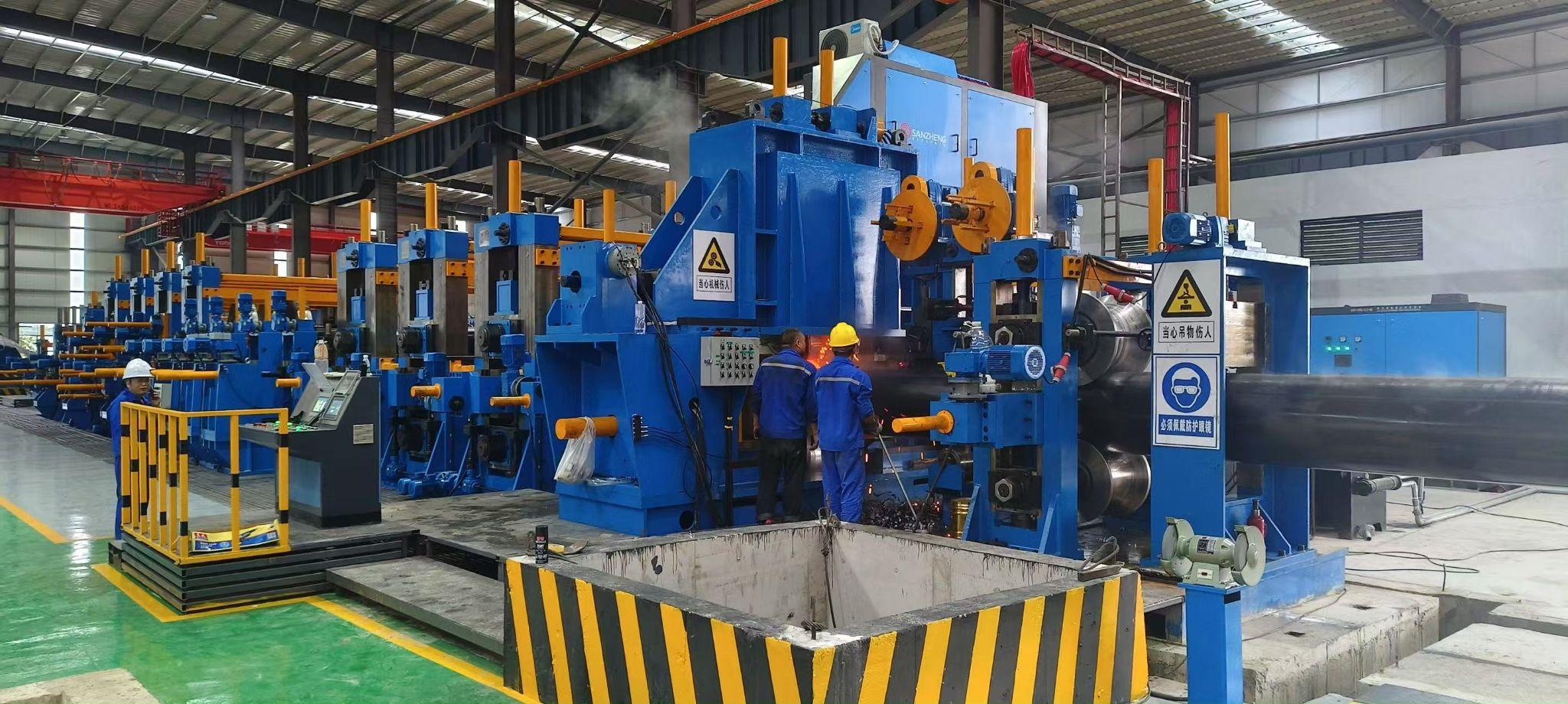
Start With Your Product Range
The first question to answer is not how fast the mill can run, but what you need it to produce.
The type of products that you plan to manufacture will determine the configuration of your ERW tube mill, including the required tube diameter and wall thickness, steel grade, profile types, lengths and the application areas where the final products will be used.
For example, the needs of a producer of structural hollow sections may differ from those of an automotive component manufacturer or a company involved in oil and gas industry. Moreover, requirements may also differ depending on whether you are manufacturing products within a narrow range or you are going to change products often.
Forever Machinery offers a full range of ERW tube mills, starting from ERW32 and ending with ERW720 models and providing solutions for both small diameter tubes and large diameter applications.
Defining the product range in advance helps determine:
- Required forming and sizing capability
- Roll tooling configuration
- Welding system requirements
- Line speed
- Cutting system
- Automation level
- Testing and finishing equipment
- Future expansion requirements
The objective is to choose an ERW tube mill that fits the products you actually intend to manufacture rather than paying for specifications that may not contribute to your production goals.
Match Tube Diameter and Wall Thickness
While tube diameter is possibly the most obvious specification when comparing ERW tube mills, it must never be viewed in isolation.
Wall thickness plays a direct role in forming, welding, and production speed. An ERW tube mill that can produce one given outside diameter does not necessarily mean that it is the right machine for all wall thicknesses and steel grades needed.
The manufacturers must therefore know the exact minimum and maximum dimensions of the tubes to consider when contacting equipment manufacturers and suppliers. This way, the required range can be matched to the appropriate forming, welding, and sizing setup.
For instance, producing structural tubes requires a different setup from the precision tubes which are more exacting regarding dimension and consistency.
This is especially important when choosing a high-speed precision line. While some Forever Machinery machines are designed to run up to 160 meters per minute with ±0.05 mm precision, depending on the set up and application needed.
Having a dimensional range ensures that the wrong size of ERW tube mill is not chosen.
Match the ERW Tube Mill to Your Material
Material being fed into the ERW tube mill will have a huge impact on the process.
Steel type, steel thickness, strip width, condition of the strip and its characteristics can all have an effect on forming process and on welding. Springback, strip flatness and edge condition can have an effect on the stability of the production line.
Prior to choosing the machine, the manufacturer must specify which types of material will be processed and give this information to the ERW tube mill supplier.
It becomes especially relevant when one needs to run a production line for materials of different types or different thickness.
The right equipment ensures more stable production process and minimizes the issues that can arise due to the wrong choice of machine configuration.
Look Beyond Maximum Line Speed
While the top speed of an ERW pipe line may look quite promising when looking at technical parameters, top speed does not mean top output capacity.
The actual capacity is determined by various parameters, including tube diameter, wall thickness, steel grade, welder speed, coil weight, changeover time, cutting length, equipment availability, downtime and efficiency of the operator.
That is why manufacturers need to estimate the practical capacity of the line, and not to pay attention solely to its maximum theoretical speed.
In case of large-scale operations, equipment like high-precision accumulators, solid-state HF welding system, high-speed flying saws, and intelligent control systems can ensure a steady work process at increased speed.
Here automation technologies can be used. For example, digital roll adjusters can increase the accuracy of setup, excluding any manual mistakes.
The key question is thus: what amount of acceptable output can the line provide in real operational conditions?
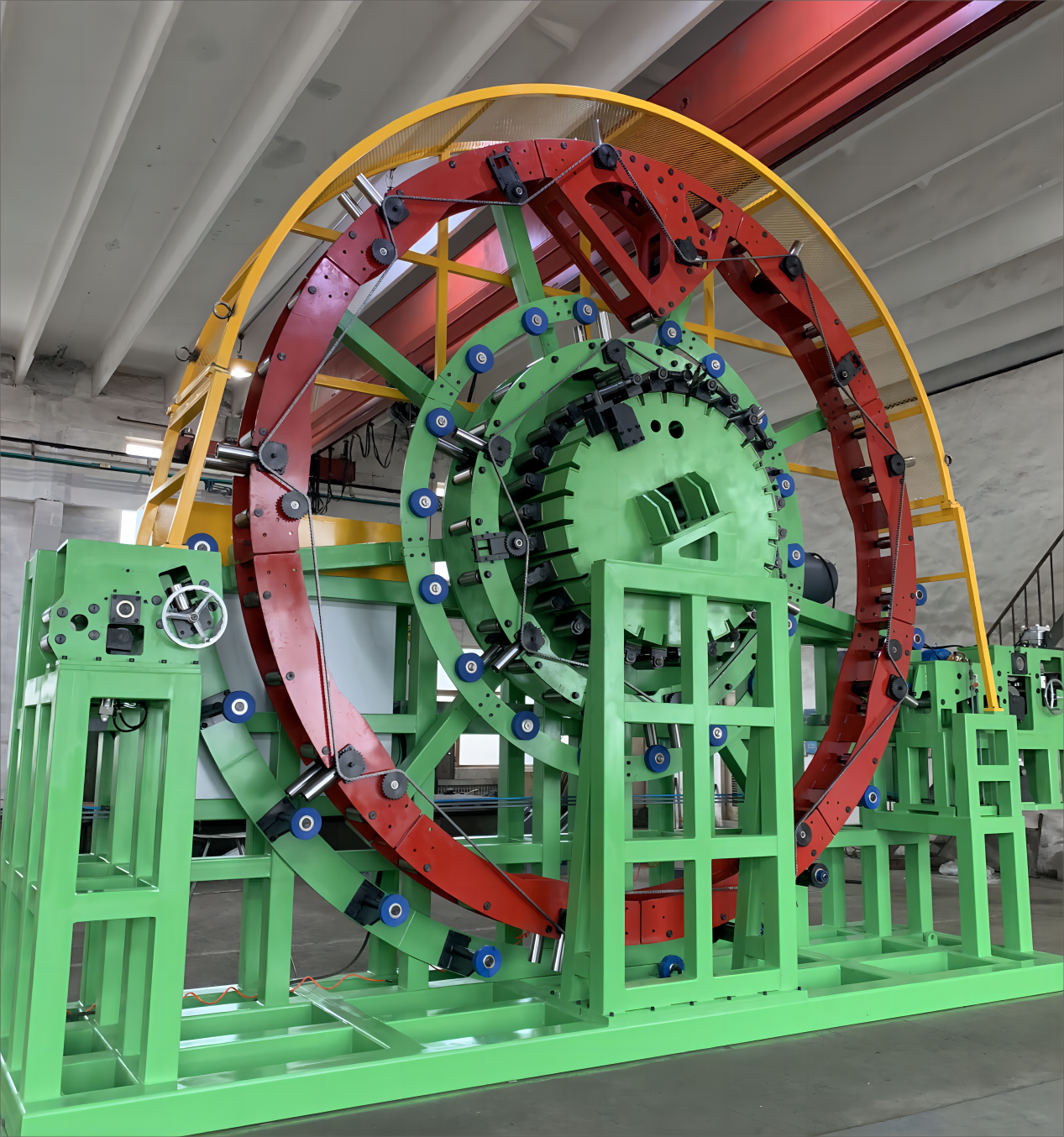
Evaluate the Forming and Welding System
Forming and welding are two processes that lie at the heart of the ERW tube mill.
During forming, the strip of steel is fed into a set of rolls which gradually form the steel into the tubular cross-section. The edges are then joined through high frequency electric resistance welding.
The quality of the resulting tube will depend on the effectiveness of the processes.
The forming process will influence the edge alignment and the condition at the welding location. And the performance of the welding will be influenced by such factors as welding power, line speed, condition of the strip, edge conditioning, impeder setting, forming accuracy, material grade and cooling conditions.
Stable welding parameters are especially important for companies making complex applications as the speed of production increases.
This is when the technology of forming and welding sections becomes important. Forever Machinery’s ERW systems are based on stable welding, precise control and strong forming with configurations specific for different tube sizes and applications.
Thus, it would be appropriate to evaluate an ERW tube mill as an integrated forming and welding machine.
Check the Complete Production Process
A modern ERW tube mill involves much more than forming and welding.
A typical production sequence includes:
Coil Loading → Uncoiling → Pinching & Leveling → End Shearing → Strip Joining → Accumulation → Roll Forming → HF Welding → Bead Removal → Cooling → Sizing & Straightening → Measuring → Flying Saw Cutting → Run-Out
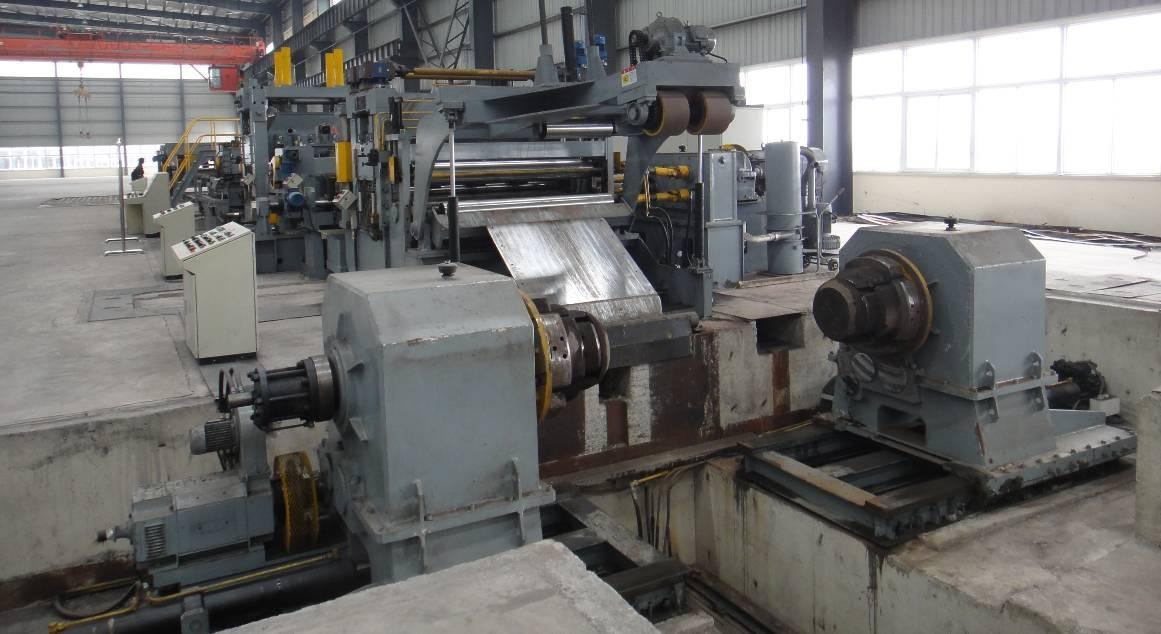
Each stage has a specific role.
Uncoiler supplies the strip to the line, whereas leveling ensures that the material is ready for precise forming. Strip joining enables coils to be joined, while the accumulator ensures continuous production flow when coils are being joined.
Following the forming and welding process, bead removal, cooling, sizing and straightening make the tube ready for final cutting and collection.
Depending on the special application, there could be more processes involved in the manufacturing. In case of API production, seam normalizing, ultrasonic testing, hydrostatic testing, end facing and chamfering could be involved.
This larger perspective of production could also have an impact on the machinery selection process. Slitting machines could be needed upstream to prepare the coils or downstream to satisfy the customer’s requirements.
With a wide range of solutions for coil handling, slitting, forming and cutting, Forever Machinery can help manufacturers see their processes from the production point of view.
Consider Changeover Requirements
Flexibility of product becomes crucial in case a manufacturer produces several types of tubes with various diameters or profiles.
Too frequent changeovers can decrease productive working time because of the necessity of intensive manual setup of the equipment. Tooling configurations and changeover methods become crucial aspects when choosing the equipment.
A manufacturer needs to estimate the frequency of changing tube diameters and the number of products he wants to produce on one line.
Quick-change technology may prove especially useful in this situation. Cassette tooling system is intended to minimize the time of changing tools and help manufacturers go from one set of production requirements to another.
In case a company works with several clients or markets, quick changeover becomes more flexible without unnecessary losses of working time.
What should be understood here is that wide product range is not the aim. What is really needed is the proper combination of product flexibility and tooling needs.
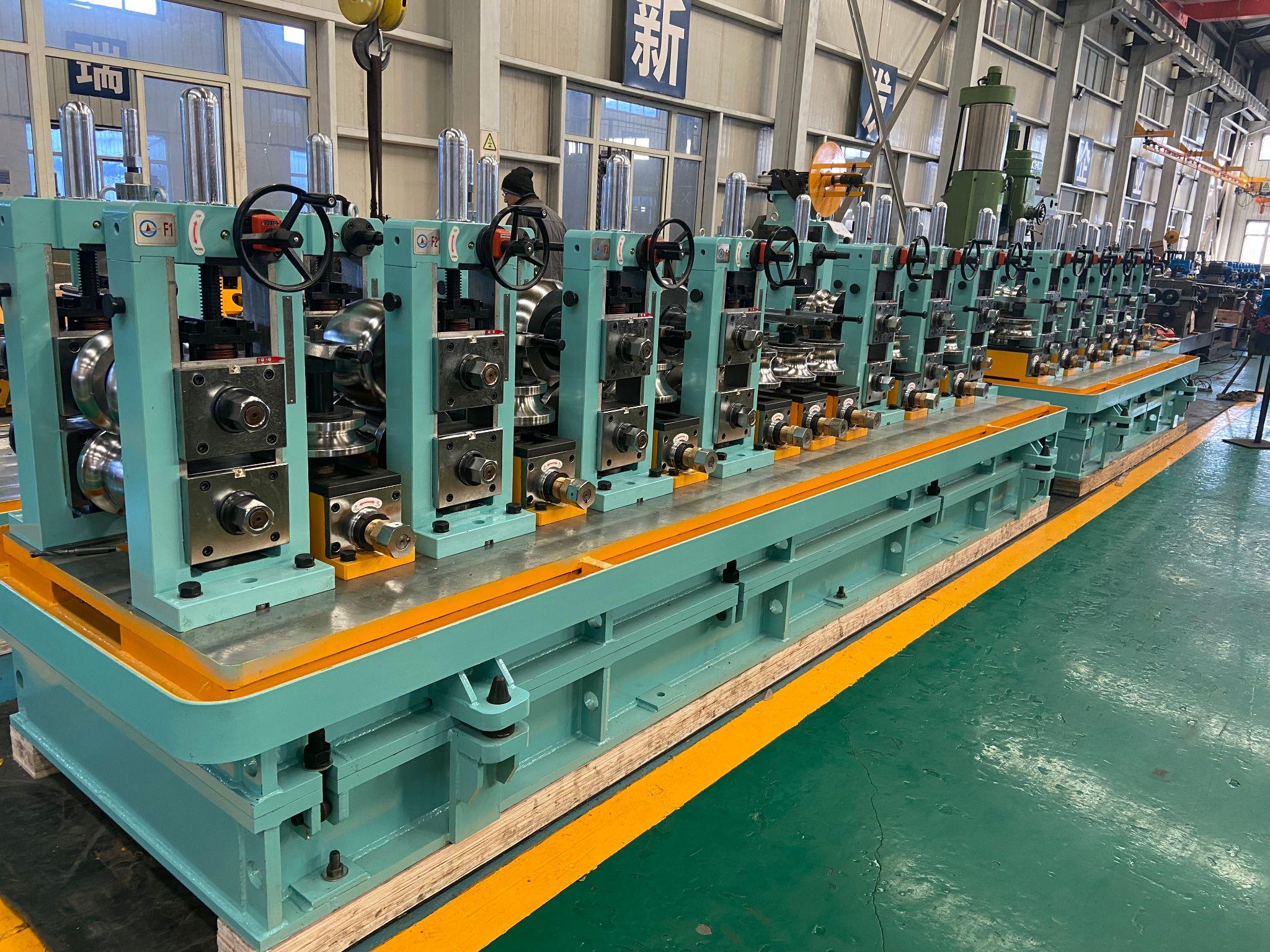
Consider Direct Forming for Hollow Sections
Manufacturers producing square and rectangular hollow sections should also consider how the forming technology affects tooling requirements and changeover time.
The traditional methods would require the changing of rolls in case different hollow sections are being manufactured. However, the direct forming technology takes a different approach to this problem by gradually forming the strip to the required profile of the square or rectangular section.
The direct forming technology developed by Forever Machinery in its fourth generation is intended for hollow sections starting from approximately 80 × 80 mm and up to 600 × 600 mm. In theory, different sizes could be produced without any changes of rolls conventionally required in case of the other technologies.
Whether the direct forming technology will be the suitable technology for the use must be assessed depending on the product range, materials, thickness, profile geometry, dimensions, and target production.
Do Not Ignore Automation and Controls
Automation can influence productivity, consistency and ease of operation.
Modern ERW tube mills can integrate process controls across forming, welding, sizing, cutting and other sections of the line. Intelligent control systems can help operators monitor production conditions and maintain stable operating parameters.
Digital roll adjustment systems can further simplify setup by allowing more precise adjustments while reducing dependence on manual positioning.
The level of automation is determined depending on the production target, shift system, products variety and operator engagement.
The higher level of automation is suitable for the mass production, while small-scale production facility may require less automation.
Thus, the automation should be chosen depending on the production conditions and not be used as the specification to optimize.
Calculate Total Cost of Ownership
The initial purchase price is only one part of the investment.
Costs of ERW tube mill may include tooling for the rolls, installation costs, commissioning cost, maintenance cost, spares, test equipment, cutting equipment and technical support.
It is not always true that a lower cost of acquisition will result in a lower cost of operation where the equipment will require constant maintenance and repair or change of tooling.
The manufacturers need to consider the total cost of ownership of the equipment during its life cycle in order to make a useful comparison of various alternatives.
Factors such as quick change tooling, fast set-up, digital control and efficient production could all add value, but they must be compared to the specific production volume and product of the manufacturer.
Key questions include:
- What is included in the initial machine configuration?
- How frequently will tooling require maintenance or regrinding?
- What spare parts should be kept on site?
- What support is available after installation?
- How quickly can technical issues be addressed?
- What maintenance requirements should be planned?
Plan for Maintenance and Long-Term Support
The ERW tube mill comprises a combination of high-speed mechanical, electrical and welding systems; therefore, preventive maintenance is very necessary.
Checks for wear, damage and alignment should be performed on the rolls. Bearings and shafts need checking, while the HF welding system, cooling systems and cutting tools also need constant maintenance.
Line alignment is another factor that needs to be considered as poor alignment could cause forming instability and dimensional issues.
It is not necessarily true that the supplier’s work stops at commissioning of the machinery as installation support, operator training, spare parts, retrofitting, refurbishing and technical help can affect the performance of the line.
For continuous manufacturers, global technical help can be very important when unexpected downtime occurs and causes disruptions to manufacturing programs.
Plan for Future Production
An ERW tube mill is a long-term investment for your manufacturing operations. The proper selection should take into account present needs as well as provide room for realistic future expansion.
Think about how your line of products may evolve in the future, and what other industries or customers may demand other tube diameters or materials.
Manufacturers that begin working with small diameter tubes may end up producing large structures in the future. Some companies may grow from producing standard structural tubes to automotive or industrial uses.
The right equipment should have a production capacity and configuration that will allow you to do that in the future.
A Practical Checklist Before Selecting an ERW Tube Mill
Before requesting quotations, manufacturers should have a clear understanding of:
- Tube diameter range
- Wall thickness range
- Material grades
- Required production capacity
- Expected line speed
- Product changeover frequency
- Required tube lengths
- Welding requirements
- Testing and finishing requirements
- Automation level
- Tooling requirements
- Maintenance and spare-parts support
- Installation and commissioning requirements
- Future production plans
Providing these details allows an equipment manufacturer to recommend a configuration based on the actual production requirement.
Selecting the Right ERW Tube Mill
The right ERW tube mill is the one that connects product requirements with practical production goals.
Instead of asking only which machine has the highest speed or lowest purchase price, manufacturers should evaluate forming capability, welding stability, usable production capacity, product flexibility, automation, maintenance requirements and long-term support.
Forever Machinery brings these considerations together across its ERW tube mill and roll-forming solutions. Its manufacturing portfolio covers ERW tube mills, direct forming lines, roll forming lines, slitting lines and cut-to-length systems, while its engineering and service capabilities extend to installation, commissioning, training, retrofits and spare-parts support.
With more than 40 years of roll-form engineering experience and over 1,000 ERW tube mill lines installed worldwide, its approach centres on long-term machine performance, production stability and reduced downtime.
For manufacturers, the selection process ultimately comes down to one principle: match the complete production line to the products you need to make, the volumes you need to achieve and the markets you plan to serve.
That approach creates a stronger foundation for consistent production, controlled operating costs and long-term manufacturing flexibility.
Frequently Asked Questions
Q1: How do I pick the ERW tube mill for my factory?
Don’t get distracted by the speed numbers. Think about what you want to produce. Start with your product details: what diameter do you need, how thick should the walls be and what kind of steel are you using? Also decide if you’re making round tubes or square and rectangular shapes. Then consider how often you’ll switch sizes, how much waste you can accept when setting up and how much floor space you have available.
Q2: Why is maximum line speed a misleading sales metric?
A machine that claims 120 meters per minute sounds impressive until you realize it might sit idle for hours during changeovers. The real production output depends on coil size, how the cutting saw works, the wall thickness of the tube and how experienced the operators are. Adding things like solid-state HF welders, good accumulators and digital roll setup helps keep the line running smoothly. That’s what matters: output, not just top speed on paper.
Q3: What is Direct Forming technology. Is it worth it?
Direct Forming lets you make rectangular tubes directly from flat steel strip without first forming a round tube. This saves time and money because you don’t need tools or setups. One system can handle sizes like from 80 x 80 mm up to 600 x 600 mm without changing roll sets. If your plant frequently switches between box section sizes this technology can significantly reduce setup time. It’s an investment if you run many different profiles.
Q4: How much automation do I actually need on the mill?
It depends on your team and your products. Digital roll adjustment systems remove guesswork. Reduce scrap during startup. On lines that need tolerances like ± 0.05 mm, automated controls for HF welding heat and line speed help maintain a clean consistent weld seam over long shifts. You won’t have to keep adjusting everything. Automation gives you reliability and better quality without operator attention.
Q5: What hidden costs should I watch out for when buying a mill?
The price tag is part of the story. Look at the cost over the life of the machine. Check how quickly the roll tooling wears out and how much it costs to regrind them. Consider the time lost during size changes. Factor in power use for the HF welder and main motors. Make sure spare parts are easy to find and that local technicians are available for support. Also watch how much metal gets wasted while tuning new runs.
Q6: What specs should I have ready before asking suppliers for quotes?
To avoid back-and-forth and get accurate quotes, gather these details in advance: your minimum and maximum outer diameters, wall thickness range, steel grade and yield strength, monthly production target in tons, how you want to change sizes (standard rolls or quick-change cassettes) and any testing equipment needed like hydrostatic testing or NDT units. Having all this information upfront makes the process faster and clearer.
Related Reading
- Direct Forming vs Conventional Forming: Key Differences, Benefits and Applications
- ERW versus Seamless Pipe Manufacturing: Which One Is Appropriate for Your Project?
- How to Increase Tube Mill Productivity: 7 Practical Strategies for Manufacturers
- High Frequency Welding Explained: Process, Benefits and Applications
- Why Saudi Arabia and the UAE Are Driving Demand for ERW Tube Mills