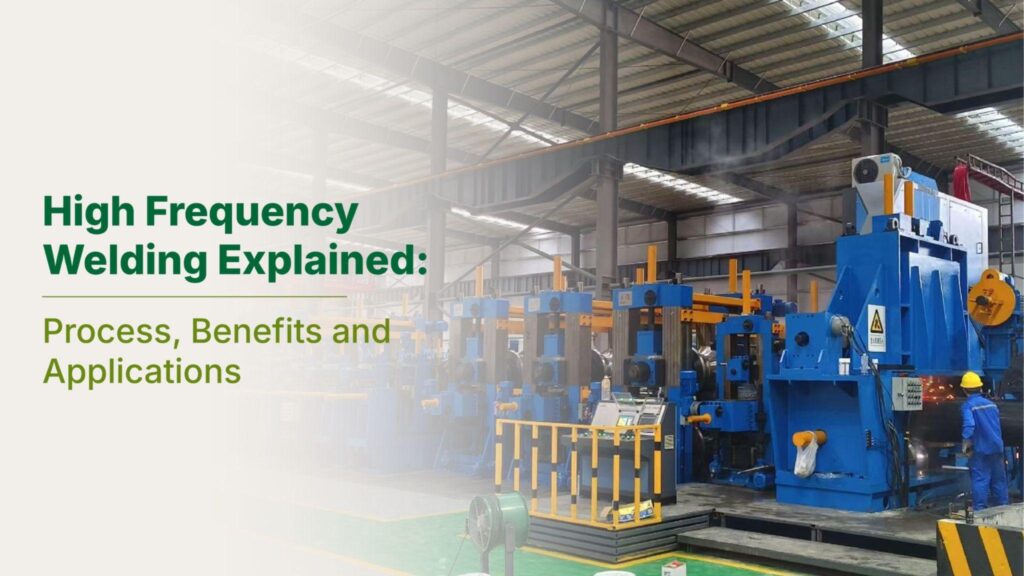

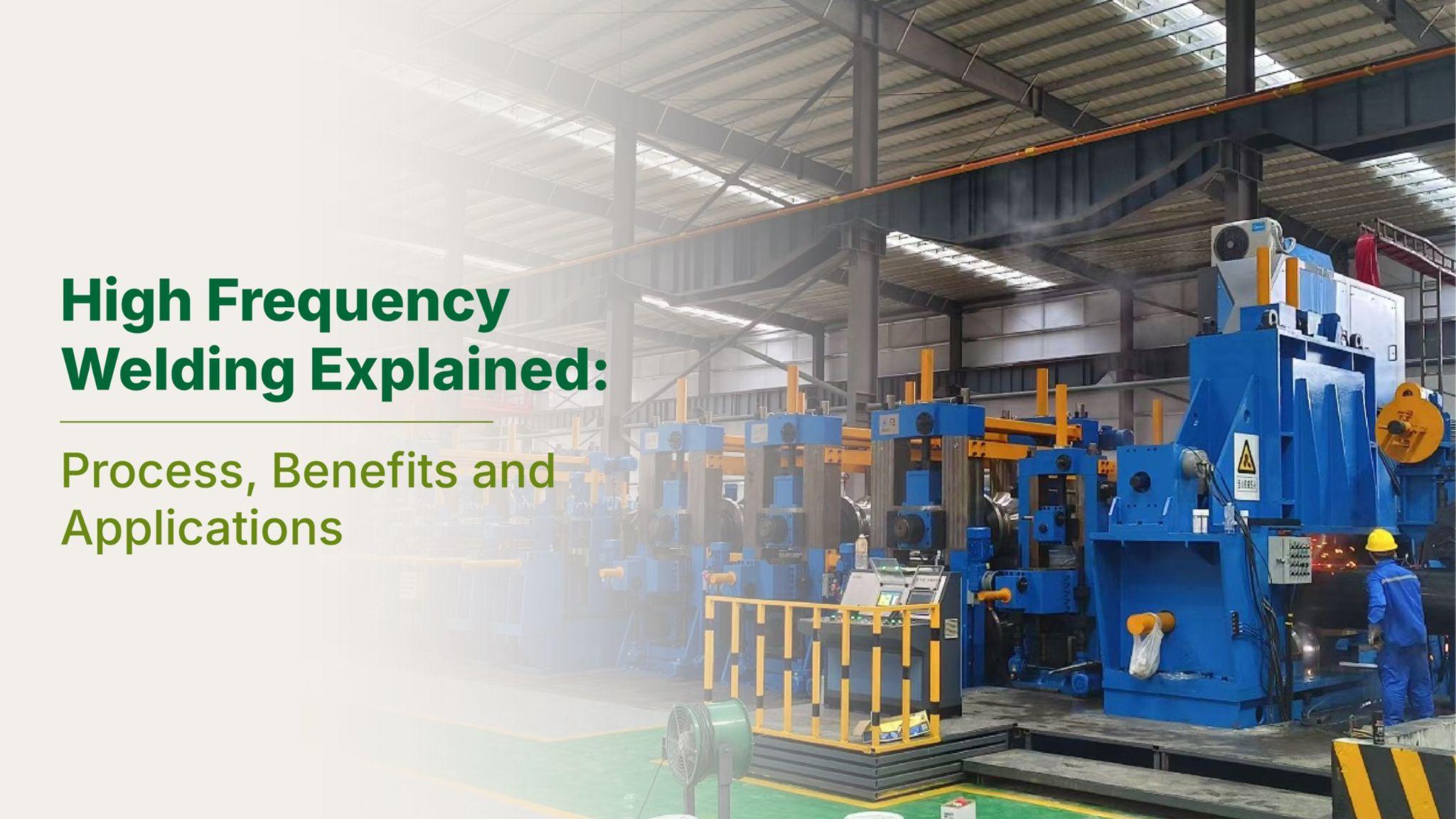
Welding is very crucial during the production of tubes of required dimensions. One common welding technique used in steel tube production is high frequency welding, whereby heat is generated by a high-frequency electrical current at the edges of a metal sheet, which are then brought together using pressure.
High frequency welding is commonly done in ERW tube mills, where metal sheets are formed into tubular structures and the longitudinal edges are joined into a weld. It is useful in processes where continuity is crucial.
Knowledge of how high frequency welding takes place is helpful in assessing tube mill technologies, the variables affecting the welding process and overall performance in production. The following is a guide to the process, types, advantages, applications and variables affecting weld quality.
What Is High Frequency Welding?
In high frequency welding, high-frequency electricity is applied to heat the edges of the metal so they can be welded together under pressure. In the tube manufacturing industry, the process involves heating the opposing edges of a sheet of steel after it has been formed into an open tube.
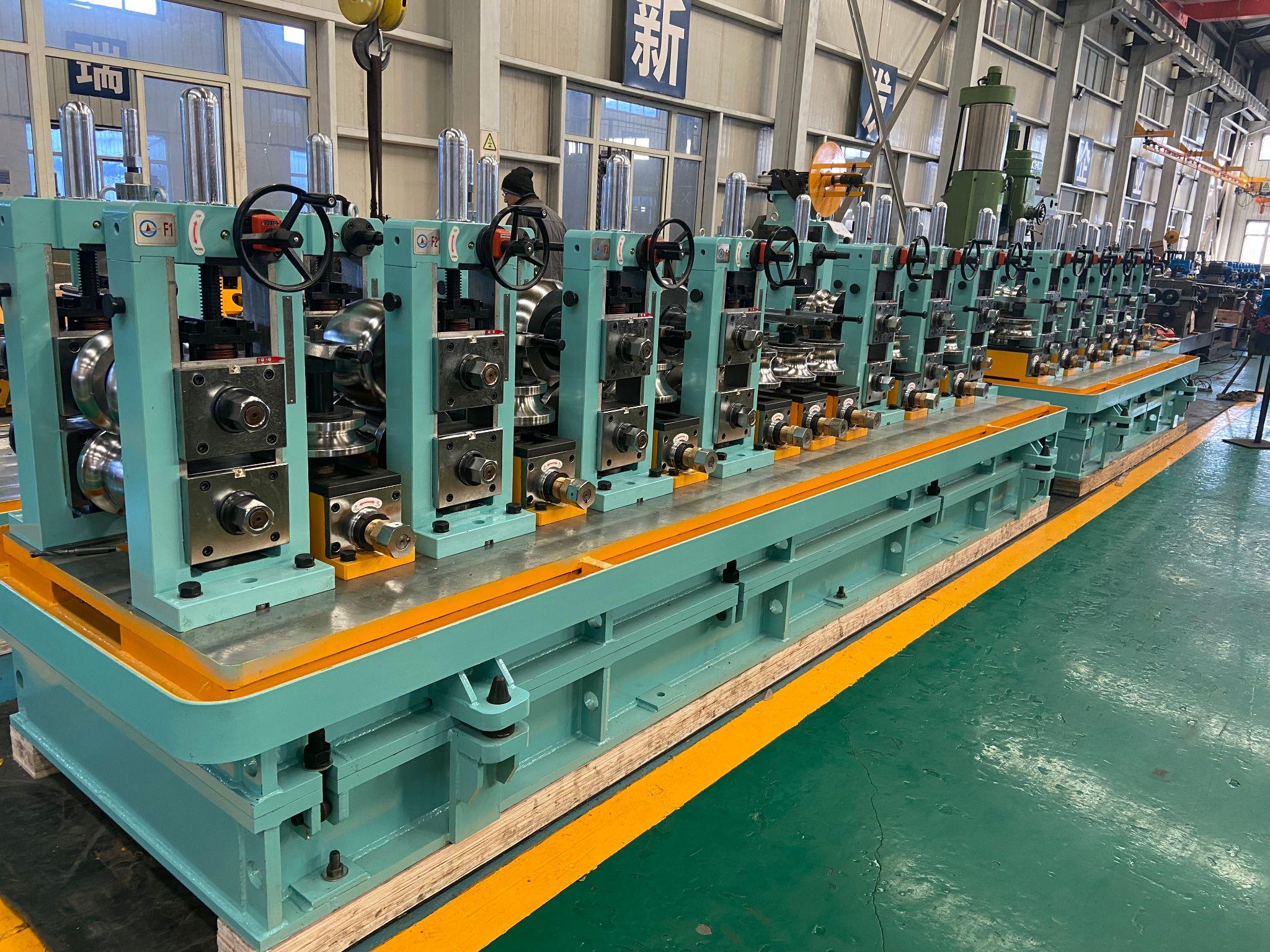
High frequency welding is popular in the manufacture of ERW tubes, where the steel sheet is rolled through the forming stands before being taken to the welding station.
In the welding station, high-frequency electricity ensures that there is localized heating on the edges of the steel sheet. As soon as the edges attain the necessary welding temperature, the squeeze rolls press the edges together under pressure to form the longitudinal weld.
Fusion welding techniques use filler material, while in high frequency tube welding no filler material is added at all.
How Does the High Frequency Welding Process Work?
The high frequency welding process includes a number of steps, each of which plays its role in creating a good quality weld.
1. Strip Feeding and Preparation
The first step starts with loading the coil of steel. It is fed into the tube mill and has to correspond to the required material parameters.
Proper preparation of the strip is necessary for correct forming and alignment along the whole length of the line.
2. Forming the Steel Strip
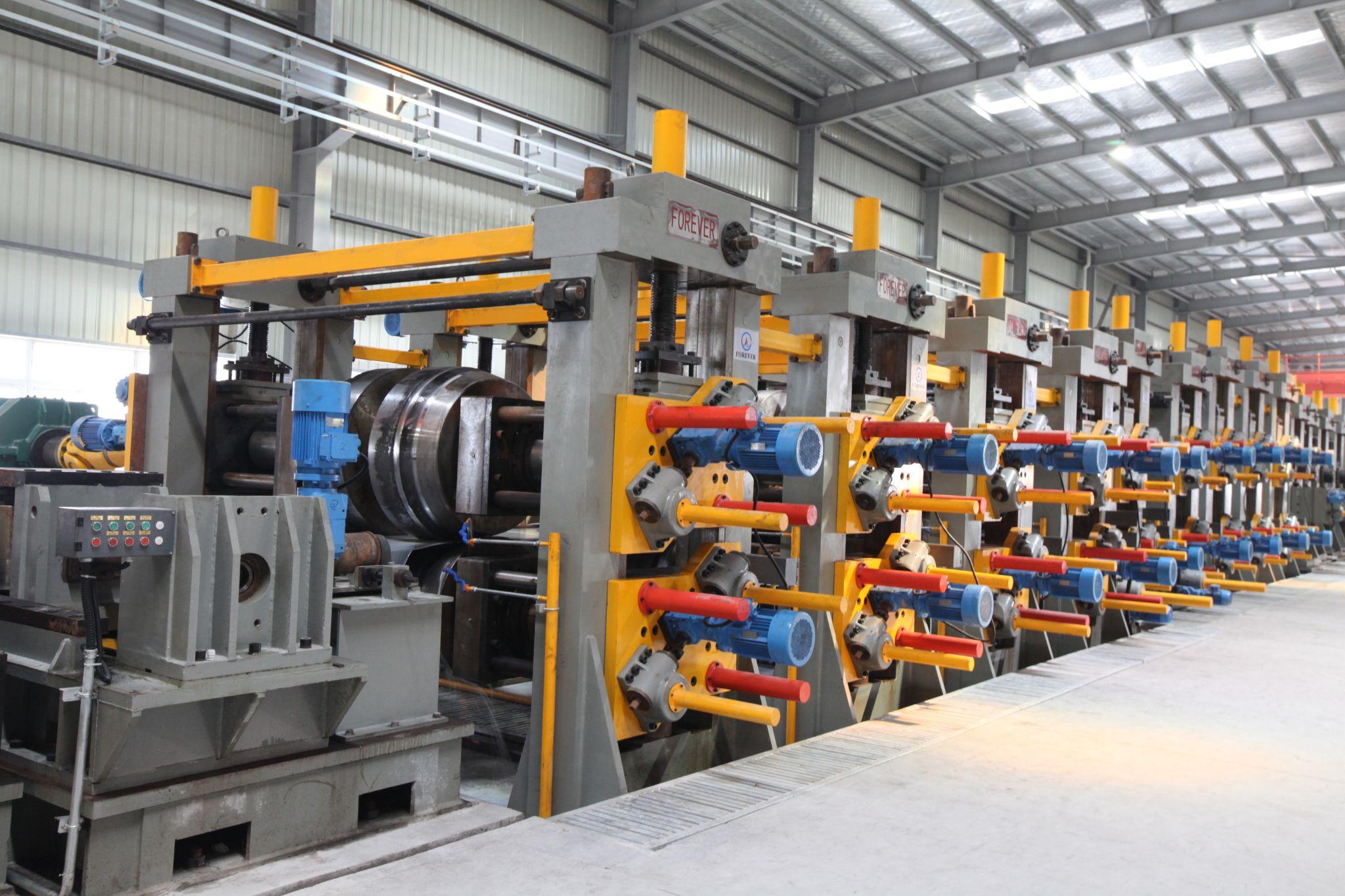
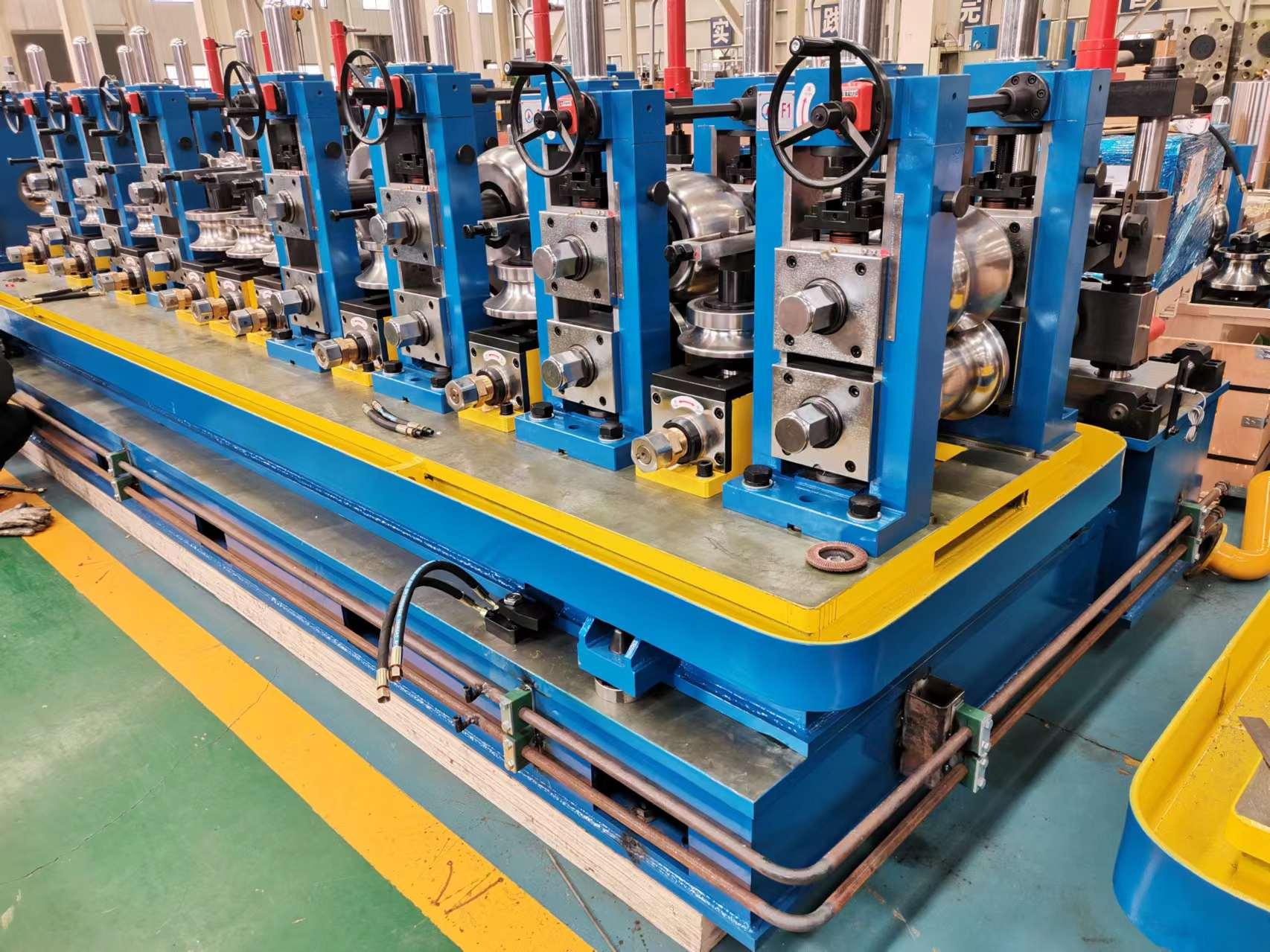
The strip goes through forming rollers, which bend it into an open tubular form. Approaching the point of welding, the two longitudinal edges come close to one another.
Correct forming is crucial, since uneven positioning of the edges affects the subsequent heating and welding process.
3. Applying High-Frequency Current
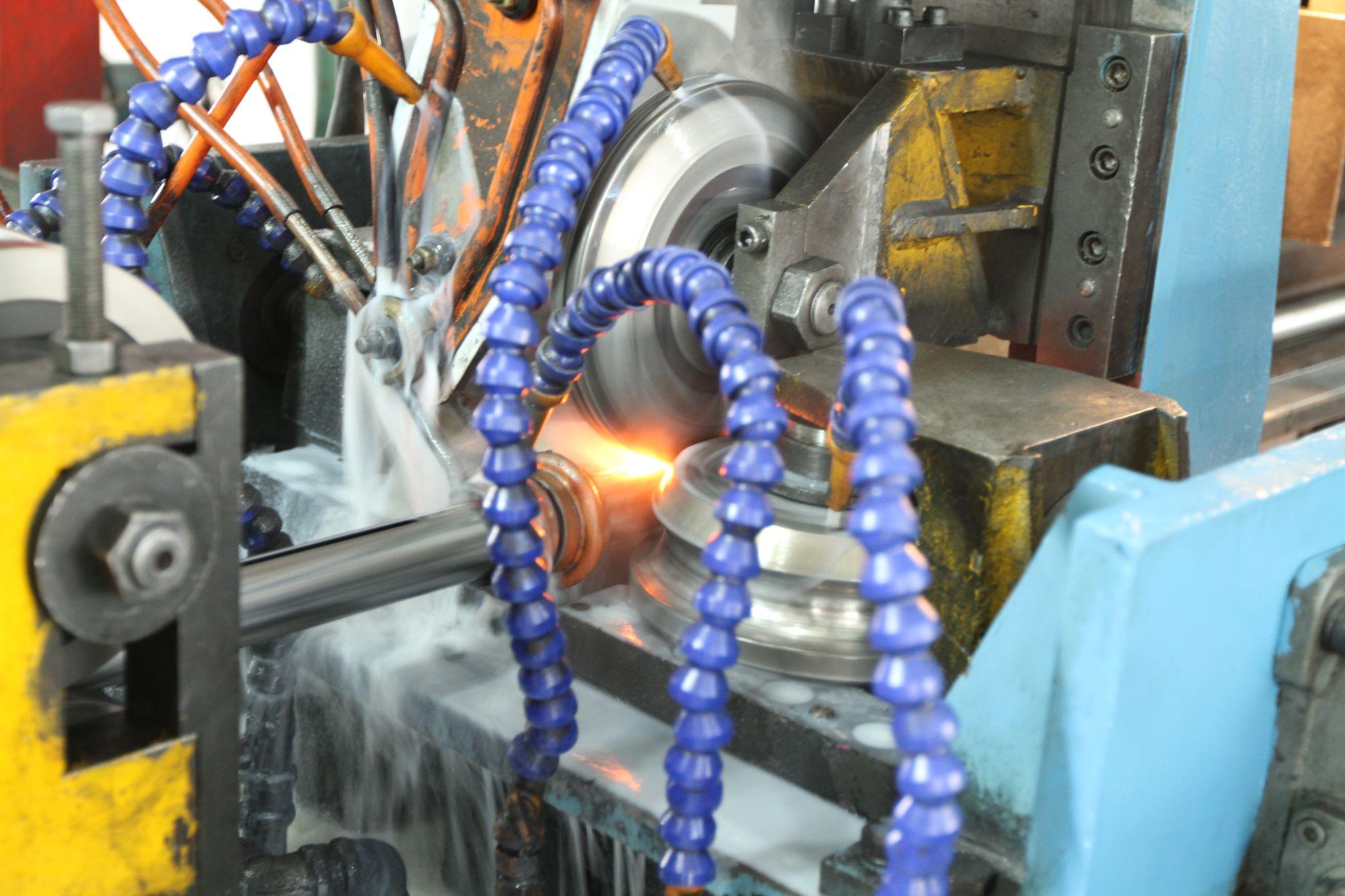
High-frequency electrical current is applied to the edges of the strip in the welding area. Depending on the design of the equipment, it can be provided either through an induction coil or through electrical contacts.
High-frequency current causes localized heating of the edges using electromagnetic principles. Skin effect and proximity effect affect the distribution of current in such a way as to facilitate heating of the necessary places.
The goal is to heat the edges up to the necessary welding temperature without additional heating of the adjacent material.
4. Joining the Heated Edges
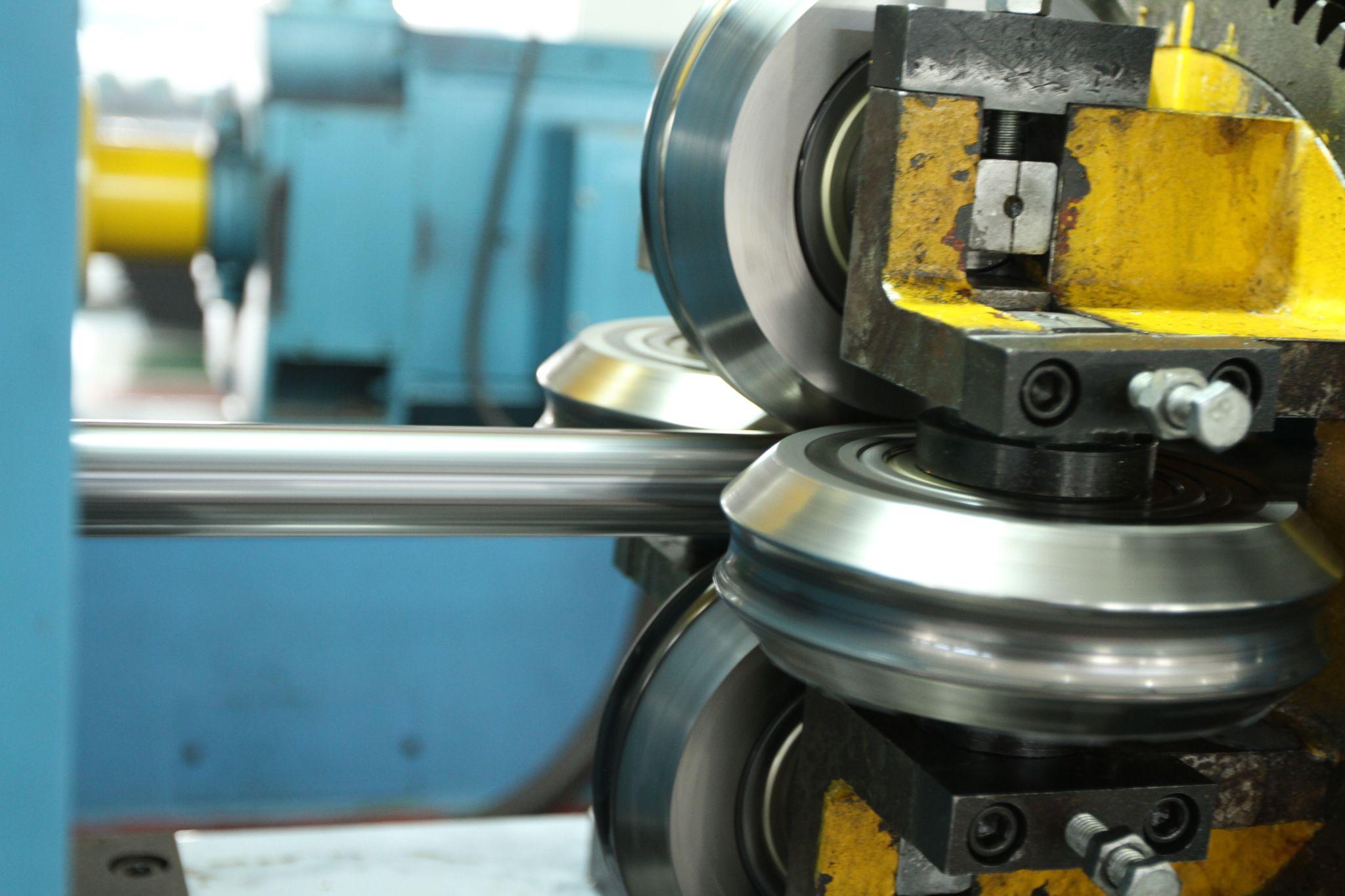
After reaching the necessary temperature, the edges are pressed together using squeeze rolls. This leads to the formation of the longitudinal weld as the heated edges join.
The welding temperature, the condition of the edges, pressure, and the properties of the material affect the formed weld.
5. Removing Excess Weld Material
Depending on the tube specifications, the excess material, called weld bead, can be removed externally and, when needed, internally from the tube.
Trimming ensures that the required surface contour and dimensions are met.
6. Cooling and Sizing
Following welding, the tube will undergo the necessary cooling and sizing processes. Forming or straightening may be performed after this, depending on how the production line was designed.
The final tube is then cut to the required length.
Types of High Frequency Welding
High frequency welding is normally carried out through two types: induction welding and contact welding. Both techniques make use of high-frequency current to generate heat in the material, but they vary in how the electrical energy is supplied to the strip.
1. High Frequency Induction Welding
In this type of welding, an induction coil produces an alternating electromagnetic field in the vicinity of the open tube at the welding joint. This causes current to flow in the metal, producing heat along the opposing edges.
An impedance or impeder can also be employed in some cases to facilitate the flow of current.
Key characteristics:
- No direct electrical contact between the coil and the tube
- Suitable for continuous tube production
- Heating controlled through electrical and process parameters
- Requires appropriate coil positioning and system configuration
Induction welding is widely used in modern ERW tube mills because it supports continuous operation and can be adapted to different tube sizes and production requirements.
2. High Frequency Contact Welding
In contact welding, high-frequency current is delivered directly to the workpiece through electrical contacts positioned near the welding point.
The current heats the strip edges, which are subsequently pressed together by squeeze rolls.
Key characteristics:
- Direct electrical contact with the material
- Requires appropriate contact positioning and maintenance
- Contact condition can influence electrical performance
- Suitable for equipment designed specifically for contact welding
The choice between induction and contact welding depends on factors such as tube dimensions, material specifications, equipment design and production requirements.
Key Factors That Influence High Frequency Weld Quality
The high frequency welding process must be in the right process window in order to get a reliable weld. Many factors affect the quality of the joint formed.
Welding Power and Frequency
The level of power that enters the welding process determines the speed of heating, while frequency affects the current distribution and heating process. Both must suit the material, the material thickness, the diameter of the tube and the speed of production.
Wrong settings may cause inadequate heating, excessive heating and unreliable weld formation.
Production Speed
Tube mill line speed determines how long the material remains within the effective heating zone. If the speed changes, welding power and other process parameters may need to be adjusted accordingly.
The goal is to maintain suitable heating and weld formation at the required production rate.
Edge Preparation and Alignment
Before the strips are welded, the edges have to be cleaned, correctly prepared and aligned.
Contamination, gaps and uneven edge preparation may affect the electrical current flowing through the joint.
Correct preparation and alignment create the conditions that are necessary to get good welding results.
Squeeze Roll Pressure
The squeeze rolls are responsible for bringing the heated edges together with pressure. Incorrect pressure and misalignment may affect the quality of the weld and the tube.
The pressure should be set according to the machine settings and material properties, not arbitrarily.
Cooling and Impeder Condition
Cooling is very important for the stable functioning of the equipment. The condition and position of the impeder (in case it is used) may affect the process.
Impaired cooling, damaged components and incorrect positioning have to be considered when the process is analyzed.
Material Properties
Steel grade, thickness, surface condition and other material characteristics influence how the strip responds to high-frequency heating.
Manufacturers should establish suitable process settings for the materials and tube specifications being produced.
Advantages of High Frequency Welding
High frequency welding offers several advantages for manufacturers producing steel tubes and pipes at industrial scale.
- High production speeds: The rapid heating process supports continuous tube manufacturing, making it suitable for high-volume production lines.
- Consistent longitudinal welds: When the process is properly controlled, high frequency welding can produce repeatable welds along the length of the tube.
- Efficient localised heating: Energy is concentrated near the joint, reducing the need to heat the entire workpiece.
- No routine filler metal requirement: Conventional high frequency tube welding generally joins the prepared edges without a separate filler material.
- Integration with automated production: Welding can be coordinated with forming, sizing, cutting and inspection systems within a continuous tube mill.
- Adaptability across applications: With suitable tooling and process settings, high frequency welding can be used for a broad range of tube sizes, wall thicknesses and steel grades.
These benefits depend on appropriate equipment selection, process control, material preparation and quality assurance.
Common High Frequency Welding Problems and Their Solutions
Although high frequency welding is well suited to continuous manufacturing, process problems can still occur.
| Common issue | Possible cause | Recommended action |
|---|---|---|
| Inconsistent weld quality | Unstable heating, incorrect settings or edge misalignment | Review process parameters and inspect edge preparation |
| Insufficient weld strength | Inadequate heating, unsuitable squeeze pressure or material issues | Investigate heating conditions, pressure and material specifications |
| Excessive weld bead | Incorrect process conditions or squeeze roll setup | Review welding parameters and bead removal arrangements |
| Surface defects near the seam | Contamination, damaged edges or inconsistent forming | Inspect strip preparation and forming alignment |
| Unstable welding performance | Electrical connection, cooling or impeder-related issues | Inspect the relevant components and verify operating conditions |
These symptoms may have several causes. Corrective action should follow a systematic diagnosis, and weld quality should be verified using the appropriate inspection and testing methods.
Applications of High Frequency Welding
High frequency welding is used across industries that require continuously manufactured steel tubes and hollow sections.
- Construction and infrastructure: Structural tubes are used in building frameworks, supports, scaffolding and other infrastructure applications.
- Automotive manufacturing: Suitable welded tubes can be used in selected automotive components and structural applications, depending on the material and performance requirements.
- Furniture manufacturing: Steel tubes are widely used in furniture frames, seating structures and other fabricated products.
- Mechanical engineering: Precision tubes can serve applications involving machinery, equipment frames and industrial assemblies.
- General engineering and fabrication: Welded tubes are used in manufacturing, material handling and a range of fabricated steel products.
The suitability of a high frequency welded tube depends on its dimensions, material grade, weld quality and the requirements of the intended application.
How Forever Machinery Supports High Frequency Tube Welding
The efficiency of high frequency welding does not depend solely on the welding power supply used. Forming accuracy, edge alignment, squeeze roll placement, line speed and downstream sizing are all factors that affect the quality of the final tubes.
Forever Machinery has over 40 years of engineering knowledge in roll-forming technology and has installed over 1,000 ERW tube mill lines globally. The product range offered by Forever Machinery includes ERW tube mills, direct forming lines, roll forming lines, slitting lines and cut-to-length lines.
There are a number of engineering aspects that are worth mentioning when considering high frequency tube welding:
- Precision forming: Consistent strip forming helps position the edges correctly before they enter the welding section.
- Stable production control: Appropriate control of line speed and welding parameters helps maintain repeatable operating conditions.
- Efficient changeovers: Quick-change cassette systems can reduce tooling changeover time, while digital roll adjustment systems can support more precise and repeatable machine setup.
- Production flexibility: The right combination of forming and welding equipment allows manufacturers to configure production lines for their required tube dimensions and applications.
The solutions offered by Forever Machinery include high speed tube mills that can achieve speeds of up to 160 m/min, with a claimed accuracy of ±0.05 mm for appropriate configurations. The real efficiency will depend on the chosen machine and conditions of its usage.
When evaluating tube mill technology, it is very useful to consider the whole production line.
Conclusion
The significance of high-frequency welding in the production of steel tubes cannot be overstated, as it uses high-frequency electrical current to weld the edges of the formed strip together. The process can help achieve continuous production of welded tubes for different purposes in many industries.
There are several things to keep in mind to facilitate successful operation, including welding power, production speed, edge conditioning, squeeze roll pressure and material and machine conditions. Observing these factors and analyzing possible problems will help manufacturers keep their processes at an optimum level.
Forever Machinery understands the connection between forming, welding and post-processing, offering machinery solutions for accurate, productive and durable tube mill equipment requirements. Using its expertise in ERW tube mills and roll forming technology, Forever Machinery helps you to make the right decisions about your equipment.
Related Reading
- ERW versus Seamless Pipe Manufacturing: Which One Is Appropriate for Your Project?
- Choosing the Right ERW Tube Mill: A Practical Guide for Manufacturers
- How to Increase Tube Mill Productivity: 7 Practical Strategies for Manufacturers
- Direct Forming vs Conventional Forming: Key Differences, Benefits and Applications
- Why Saudi Arabia and the UAE Are Driving Demand for ERW Tube Mills