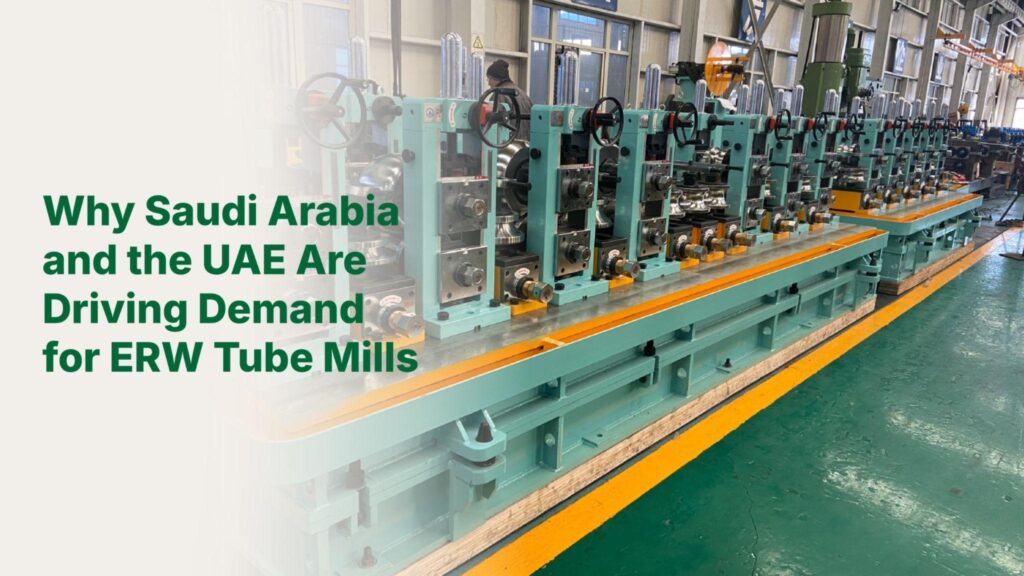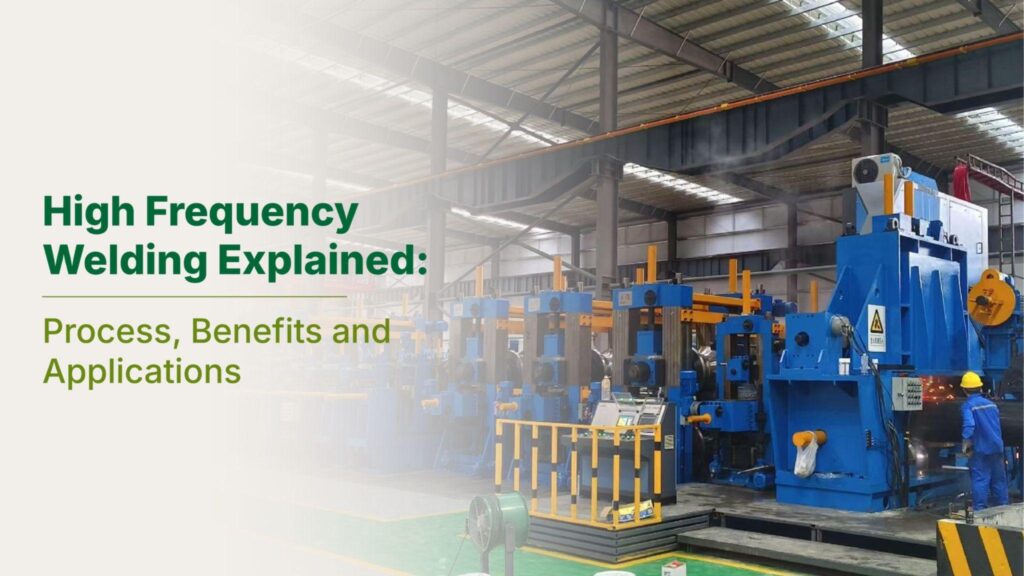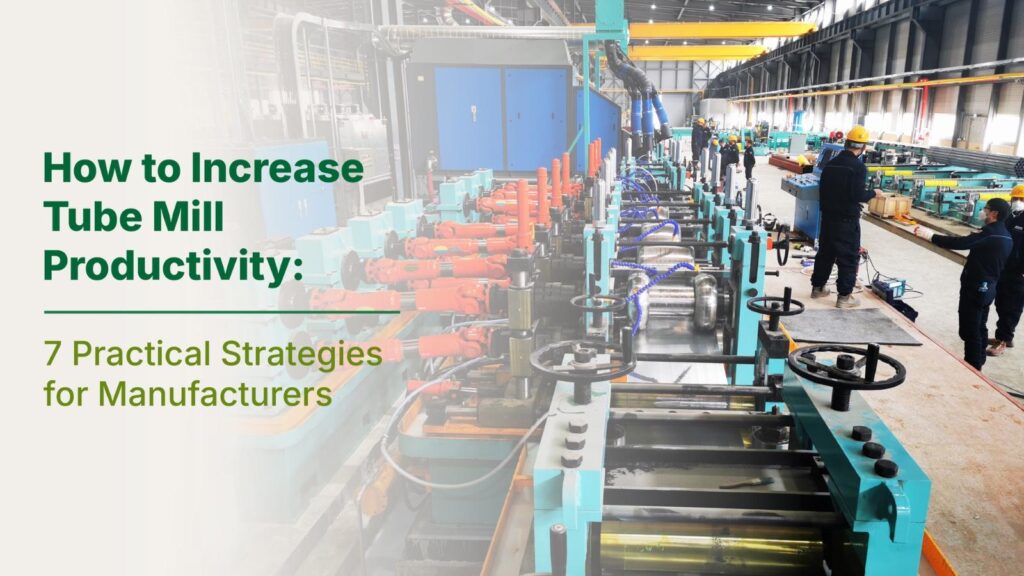

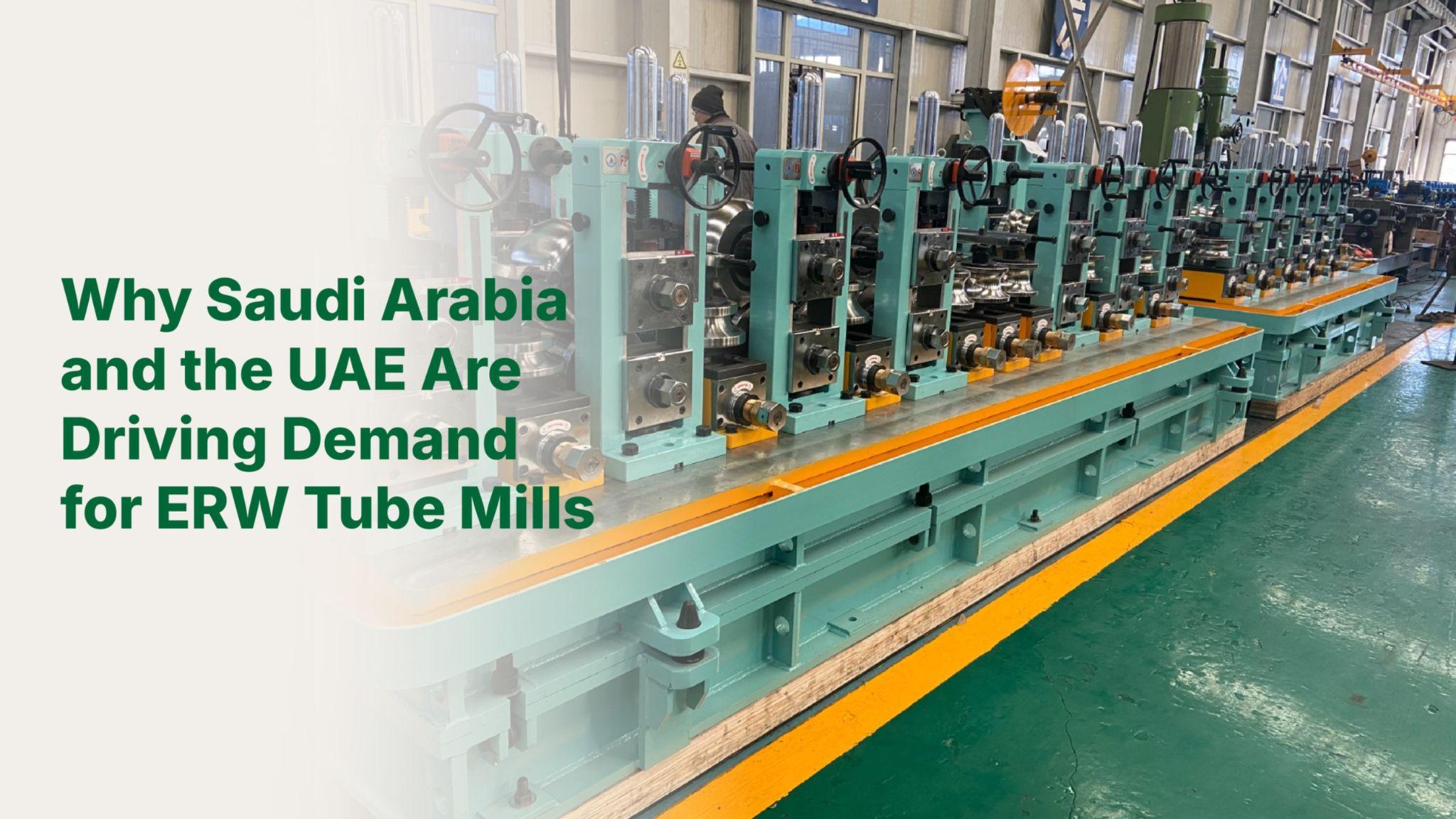
In the last ten years, the Middle East has transformed from a region that mostly consumes steel products to one of the most rapidly developing regions of the world in terms of manufacturing and infrastructure. The core actors behind this development are Saudi Arabia and the United Arab Emirates, which are both investing billions of dollars to diversify industry, build infrastructure and develop energy projects, logistics and advanced manufacturing. With the growth of all these sectors, there has been rising demand for welded steel tubes, and the ERW Tube Mill Middle East market has become one of the best investment areas for steel manufacturers.
Unlike earlier construction cycles, in which growth was triggered by temporary government spending, the current growth is backed by long-term national development strategies. Saudi Arabia and the UAE have Vision 2030 and Operation 300bn respectively, both aimed at strengthening domestic manufacturing, reducing imports, fostering localization and building globally competitive supply chains. Steel tube manufacturing becomes a focal point of these strategies since tubes are crucial for construction, oil and gas, water infrastructure, renewable energy, transportation, industrial plants and heavy engineering.
Consequently, companies are making use of ERW Tube Mill Middle East production lines that can produce structural hollow sections, round tubes, square tubes, rectangular tubes, API line pipe and precision steel tubing to strict international standards.
For investors considering ERW Tube Mill Saudi Arabia or ERW Tube Mill UAE production line projects, price is no longer the deciding factor when choosing equipment. They now compare automation capability, tooling quality, production flexibility, commissioning assistance, spares availability, energy consumption and lifetime running cost before buying from an ERW Tube Mill Manufacturer.
This guide explains why Saudi Arabia and the UAE are driving unparalleled growth in ERW Tube Mill Middle East investments, looks at the industries that are opening up opportunities, and identifies the points manufacturers need to consider before making any investment.
Why the Middle East Has Become a Strategic Market for ERW Tube Mills
Just ten years ago, large volumes of structural steel tubes and welded pipes were being sourced from outside the GCC. Imports are still important, but governments have now started to support indigenous manufacturing, which is not only good for the supply chain but also cuts down costs.
This is one major reason why the scenario for the ERW Tube Mill Middle East market has changed.
Governments in Saudi Arabia and the UAE are introducing policies that push manufacturers to set up local steel processing plants that can supply tubes for major infrastructure projects. Instead of importing steel tubes from outside, manufacturers find it more convenient to source the product from within the region.
This is very good for businesses. Setting up an ERW Tube Mill enables companies to cater to domestic projects as well as other GCC countries, North Africa and some parts of Asia.
The strategic positioning of both countries increases this opportunity further. Ports like Jeddah Islamic Port, King Abdulaziz Port, Jebel Ali Port, Khalifa Port and numerous other industrial logistics centers link producers with their export markets, making regional production economically viable even beyond local consumption.
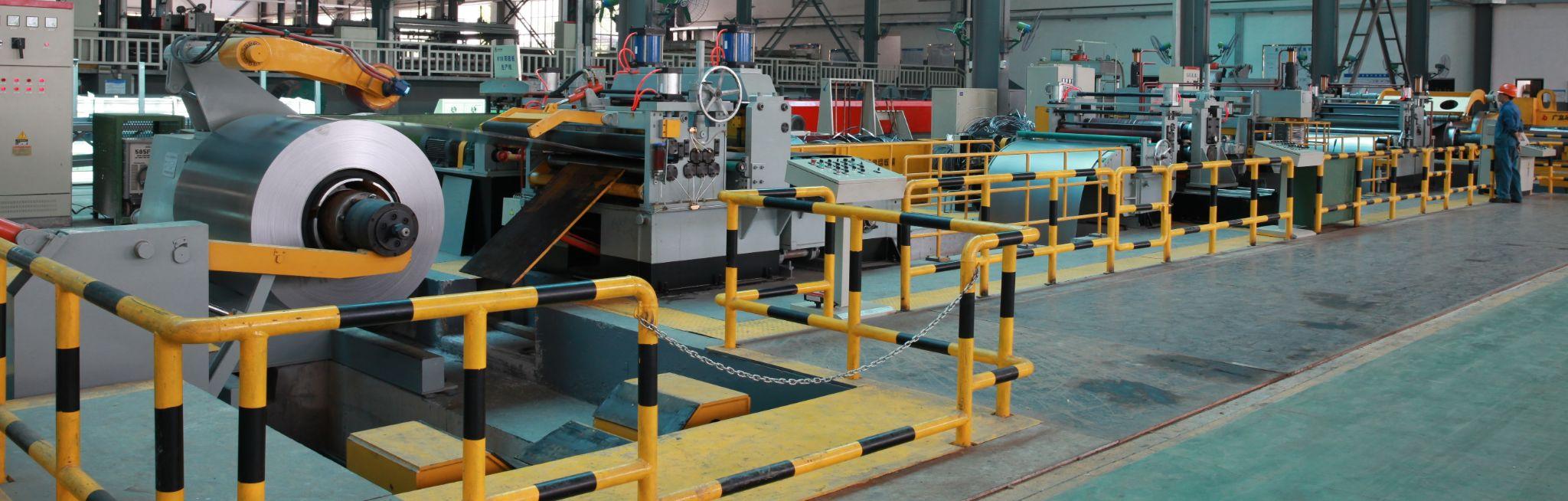
With increasing manufacturing capabilities, many investors are also investing in the necessary equipment such as Slitting Lines, Cut-to-Length Lines and coil handling equipment, thus improving productivity on the Steel Tube Production Line.
Saudi Arabia Is Leading the Next Phase of Industrial Growth
Saudi Arabia is the biggest destination for investments into ERW Tube Mill Saudi Arabia projects in the entire Middle East region.
The implementation of Vision 2030 has completely changed the economic development trajectory of the country by cutting down its dependency on oil revenues while opening up new avenues in manufacturing, logistics, mining, tourism, renewable energy, healthcare and industrial manufacturing. This is important in the context of steel manufacturing because almost every project needs steel tubing at each stage of its execution.
While other countries usually concentrate on the development of one area at a time, Saudi Arabia is building several regions, industrial cities, transportation routes, manufacturing centers and smart cities altogether. All of them help increase the consumption of welded steel tubes.
When you are considering investing in ERW Tube Mill Middle East capacity, this means that there will be stable demand in the future.
Mega Projects Are Reshaping Steel Demand
Very few countries have ever launched infrastructure projects on a scale as large as that in Saudi Arabia.
Projects like NEOM, The Line, Oxagon, Trojena, Qiddiya, Diriyah Gate, Red Sea Global and King Salman International Airport, along with many other expansions of existing industrial cities, require immense amounts of fabricated steel products in all phases of their development.
Steel tubing is used extensively for:
- Structural hollow sections
- Commercial buildings
- Industrial warehouses
- Airport terminals
- Utility infrastructure
- Mechanical support systems
- Transport facilities
- Security barriers
- Renewable energy installations
- Water transmission projects
This demand is not only for several months but will go on for several years, giving manufacturers continuous production opportunities.
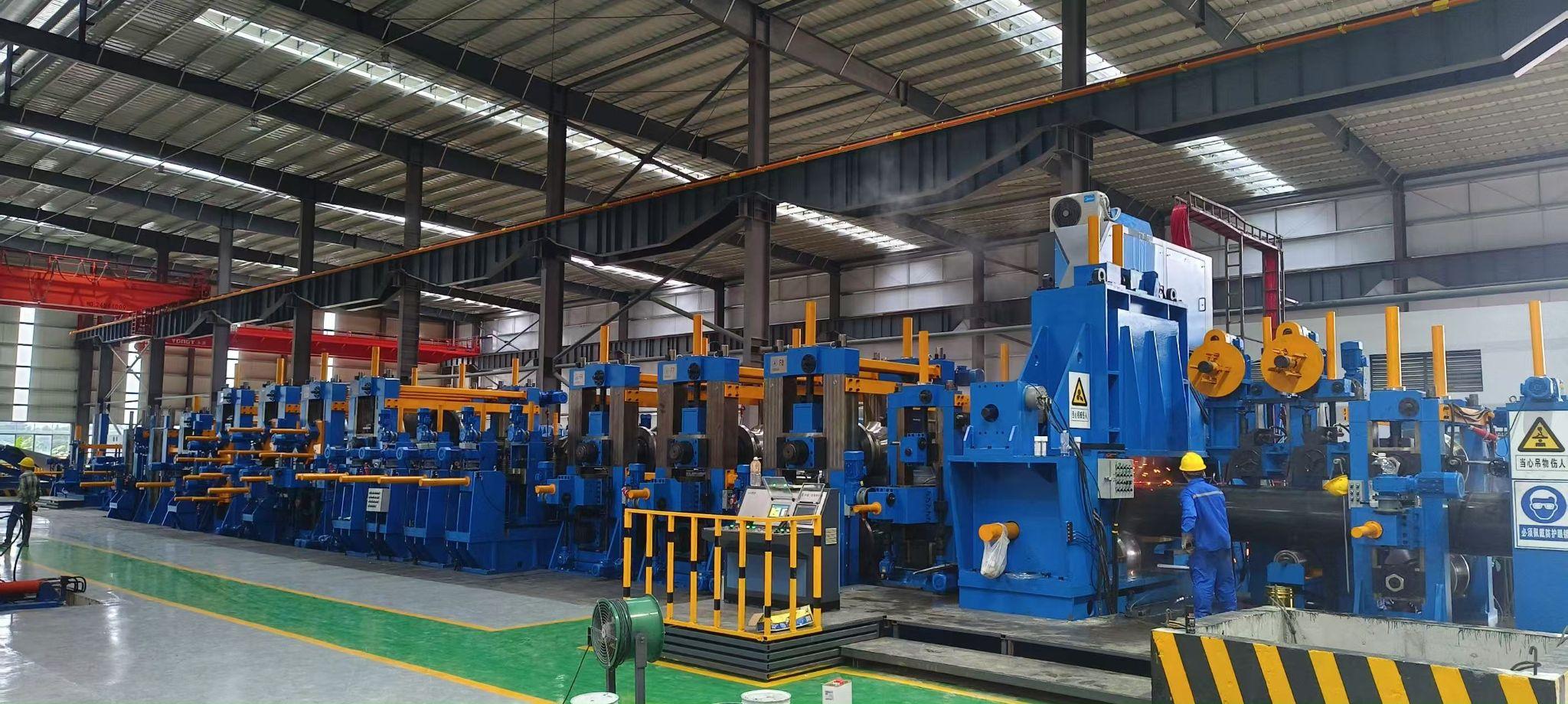
Most of the manufacturers who start working in the market usually do so with flexible ERW60, ERW76, ERW89 or ERW114 ERW Tube Mill machines because they offer the necessary flexibility to manufacture structural construction products while also producing various types and sizes of tubes.
If production demands grow, manufacturers move on to larger ERW168, ERW219 and API Tube Mill machines.
Industrial Localisation Is Increasing Domestic Manufacturing
The reason for increasing investments in ERW Tube Mill Middle East capacity goes beyond infrastructure alone.
Saudi Arabia has introduced localization programs which encourage companies to produce more products locally.
Instead of importing the finished product, companies have increased their manufacturing capacity to serve construction companies, industrial contractors, government organizations, EPC companies and exports.
This strategy creates demand for complete Steel Tube Production Line solutions capable of producing:
- Round steel tubes
- Square hollow sections
- Rectangular hollow sections
- Mechanical tubing
- Water transmission pipe
- Industrial process pipe
- Structural steel tubing
For many manufacturers, investing in a modern ERW Tube Mill Manufacturer solution provides greater long-term value than continuing to rely on imported finished products.
Automation has become another important purchasing factor.
Labour shortages, increasing quality expectations and higher production targets encourage manufacturers to invest in highly automated ERW Tube Mill Middle East systems that minimise manual intervention while improving dimensional consistency, welding stability and overall production efficiency.
Technologies such as Quick Change Roll Systems, automatic sizing adjustment, digital production monitoring and intelligent control systems significantly reduce downtime while increasing productivity, benefits that become increasingly valuable as production volumes continue growing.
Oil, Gas and Energy Continue to Generate Long-Term Demand
Economic diversification is fast-paced, yet oil and gas continue to play a vital role in the industrial economy of Saudi Arabia.
The national oil company continues to explore upstream production, natural gas processing, pipelines, petrochemical plants, storage terminals, refineries and exports. At all these levels, there is an increasing need for large amounts of welded steel pipes.
That is why manufacturers offering an ERW Tube Mill Saudi Arabia solution can benefit greatly, especially when the facility can make pipes that conform to the rigorous requirements of the energy sector.
Pipe structures find extensive applications within processing plants, refinery constructions, offshore facilities, equipment foundations, storage plants and industrial buildings. Pipelines for water transport, utilities and various other industrial applications use welded steel pipes.
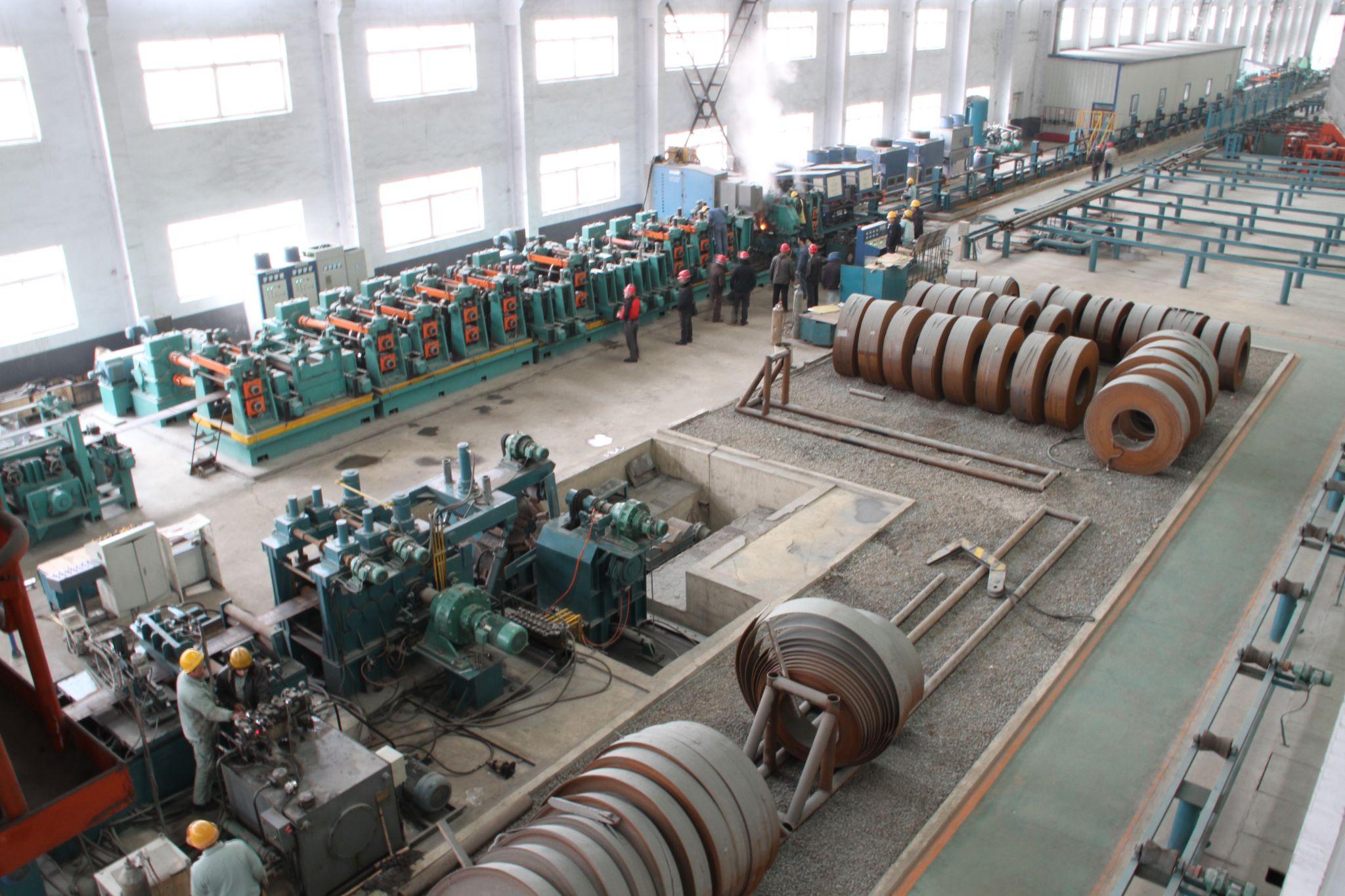
Manufacturers that wish to penetrate these markets usually consider investing in special API Tube Mill technologies that help produce high-quality line pipe with uniform weld integrity and dimensions, along with in-built quality control.
When selecting suppliers, buyers do not only consider production capabilities but also tooling quality, automation level and the technical assistance of the ERW Tube Mill Manufacturer.
The UAE Is Strengthening Its Position as the Middle East’s Manufacturing Hub
Unlike Saudi Arabia, which is relying on infrastructure growth to create demand, the ERW Tube Mill UAE industry is growing owing to a combination of technological advances in manufacturing, export-oriented production and industrial diversification. Over the years, the country has built one of the most efficient business environments globally thanks to its ports, free zones, logistics infrastructure and policies aimed at attracting foreign manufacturing companies.
Today, the country’s industrial strategy extends well beyond real estate development. Through initiatives such as Operation 300bn, the UAE aims to significantly increase manufacturing’s contribution to the national economy by encouraging investment in steel processing, heavy engineering, industrial equipment and advanced production technologies.
For manufacturers evaluating an ERW Tube Mill Middle East investment, the UAE offers several advantages. Businesses can efficiently serve domestic infrastructure projects while exporting welded steel tubes to neighbouring GCC countries, East Africa and South Asia using established logistics networks centred around Jebel Ali Port, Khalifa Port and other strategic shipping hubs.
Construction, Logistics and Industrial Expansion Continue to Increase Steel Consumption
The UAE continues to be one of the region’s busiest construction markets in spite of the advanced level of development of its commercial property industry.
Large construction projects in Dubai, Abu Dhabi, Sharjah and Ras Al Khaimah continue to create demand for structural steel, while logistics parks, industrial sites, airport extensions, warehouses and manufacturing units need considerable amounts of welded steel tube.
Projects in Jebel Ali Free Zone (JAFZA), Khalifa Industrial Zone Abu Dhabi (KIZAD), Dubai South and many other industrial clusters are motivating manufacturers to set up local manufacturing operations rather than relying solely on imports of steel products.
Steel tubes are needed for:
- Structural building frames
- Industrial warehouses
- Material handling systems
- Conveyor structures
- Utility networks
- Airport infrastructure
- Logistics centres
- Industrial fabrication
- Mechanical equipment
- Storage facilities
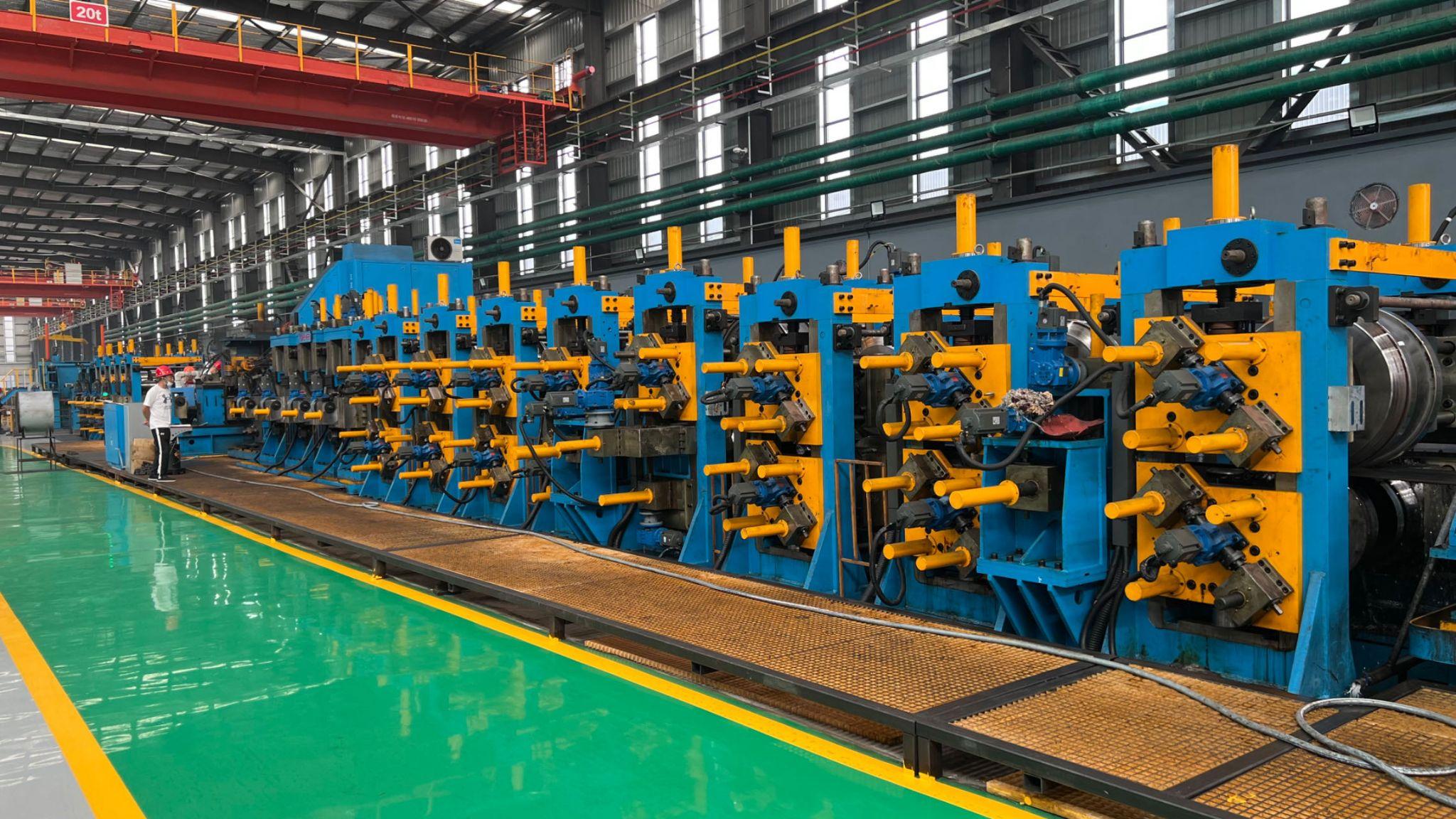
Manufacturing companies serving these industries usually need production flexibility rather than focusing exclusively on particular categories of products. As a result, ERW89, ERW114 and ERW168 ERW Tube Mill equipment continues to be one of the most attractive purchases, since manufacturers are able to produce different tube sizes at relatively high speed.
For manufacturers wanting to produce more flexible products, Direct Forming Line technology becomes increasingly interesting, especially when companies switch regularly between various square and rectangular hollow sections.
Energy Diversification Is Creating New Demand Beyond Oil and Gas
Though the oil and gas industry continues to be important, the UAE is also investing in renewable energy, hydrogen production, high-tech manufacturing, desalination plants and utilities.
Various projects implemented by ADNOC, Masdar and other government-supported companies are helping to develop the country’s industrial base and increase the demand for welded steel tubing for many different applications.
Solar energy projects need support structures, mounting, cable supports, maintenance platforms and substation construction made of welded steel profiles. Hydrogen production plants need process piping, utilities, storage facilities and industrial construction, while desalination plants need a lot of structural and process tubing.
Such industries need various tube diameters, but they all must be consistent regarding welding and dimensional accuracy.
That is why buyers who invest in an ERW Tube Mill UAE give preference to automation, production reliability, tooling accuracy and flexibility rather than only a low machine cost.
It is also obvious to manufacturers that Slitting Lines, automatic uncoiling systems and inspection technologies will increase the efficiency of the whole Steel Tube Production Line.
Meeting International Standards Is Essential for Long-Term Success
Unlike other new manufacturing markets where cost is the deciding factor in making purchases, manufacturers based in Saudi Arabia and the UAE usually cater to government infrastructure projects, multinational engineering firms and international EPC contractors.
Consequently, quality considerations become more important when choosing an ERW Tube Mill Manufacturer.
Depending on the type of project, manufacturers can be required to produce steel tubes according to international standards like API 5L, ASTM standards or other engineering criteria set by the customer. Oil and gas projects often require extensive documentation, non-destructive testing, hydrotesting, dimension measurement and thorough traceability during manufacturing.
Achieving such standards needs much more than just purchasing an ERW Tube Mill.
Manufacturers have to consider roll tooling quality, welding consistency, HF welding capability, sizing capability, flying cutoff, inspection systems and process control. Equipment that is capable of holding dimensional tolerance through long production runs is more valuable than equipment bought purely for its lower price.
For manufacturers serving high-quality infrastructure projects, it pays to invest in automation in the early stages of purchase rather than later.
Choosing the Right ERW Tube Mill Requires More Than Comparing Prices
With competition increasing in the ERW Tube Mill Middle East market, there have been many changes in procurement strategies.
Today’s buyers understand that the purchase price forms just one part of the total investment.
An ERW Tube Mill can stay in operation for twenty years or more. During this time, production efficiency, roll tool life, availability of spare parts, maintenance needs, energy consumption, commissioning, software updating and technical services usually carry far more weight than the capital cost of the machine.
Lower-priced machinery might seem appealing during procurement but could end up causing long periods of machine downtime, poor welding quality, short roll tool life, high maintenance costs and operational inefficiency.
Consequently, manufacturers comparing ERW Tube Mill Manufacturers increasingly evaluate:
- Engineering capability
- Automation systems
- Roll tooling quality
- Production speed
- Changeover efficiency
- Spare parts support
- Remote technical assistance
- Operator training
- Future upgrade capability
- Lifetime operating cost
This shift towards evaluating total cost of ownership rather than purchase price alone is one of the defining characteristics of today’s ERW Tube Mill Middle East market.
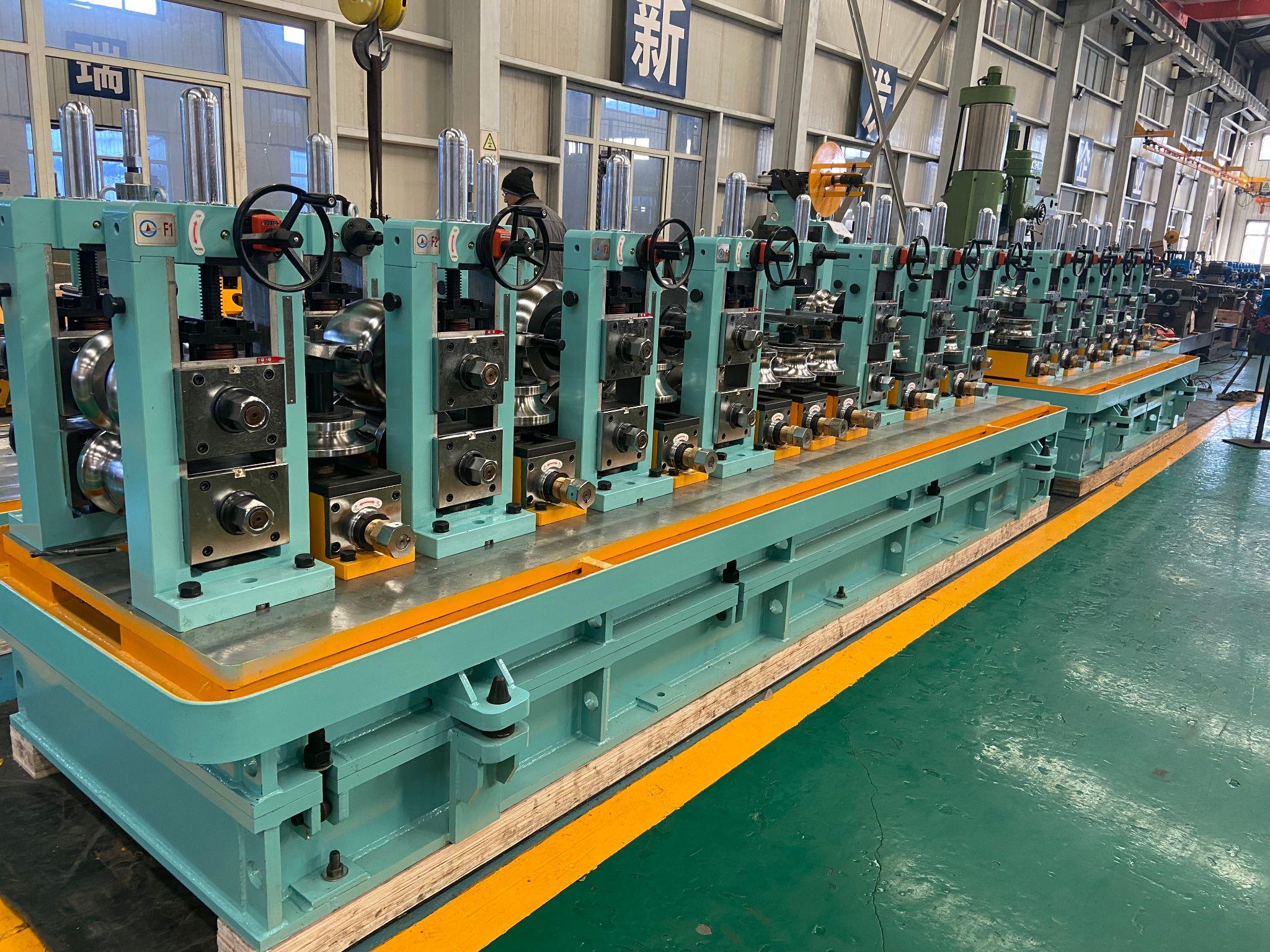
Selecting the Right ERW Tube Mill for GCC Manufacturing
Each manufacturer has their own production criteria, and therefore there is no one universal ERW Tube Mill that can be recommended for every company. Each company has to make an investment based on its products, the industries it is targeting, desired capacity and production growth plans.
For manufacturers of steel pipes targeting the construction industry, flexibility may be the top priority. Production of square, rectangular and round hollow sections in various sizes requires a highly flexible ERW Tube Mill Middle East line that can quickly change product lines without compromising dimensions. Our ERW60, ERW76, ERW89 and ERW114 models are often preferred for such projects due to their combination of production capacity, flexibility and investment cost.
For manufacturers targeting infrastructure projects, bigger production capacity and a wider product range are usually required. In such situations our ERW168, ERW219 and larger ERW Tube Mill models will be more relevant.
When marketing to firms in the energy sector, the priorities are likely to be different. For example, producing line pipe for oil, gas, water transmission and industrial process applications demands equipment that can meet high quality standards. API Tube Mills are designed to provide such standards in pipe production, using precision forming, reliable high frequency welding, on-line inspection and correct sizing.
Precision Tube Mills, in turn, are more appropriate for manufacturing companies that operate in furniture, automotive, mechanical engineering or precision fabrication industries due to the higher dimensional accuracy and stricter production tolerance demanded by such applications.
Moreover, an increasing number of GCC manufacturing companies opt for the Direct Forming Line. In contrast to conventional roll forming, this technology provides increased flexibility when producing square and rectangular profiles and reduced tooling demands for some production programs.
Building an Efficient Steel Tube Production Line
Buying an ERW Tube Mill Middle East line is just a step in the direction of setting up a competitive manufacturing facility.
Efficient production is achieved through the effective integration of the entire line of operations, from the handling of raw materials to tube inspection after production.
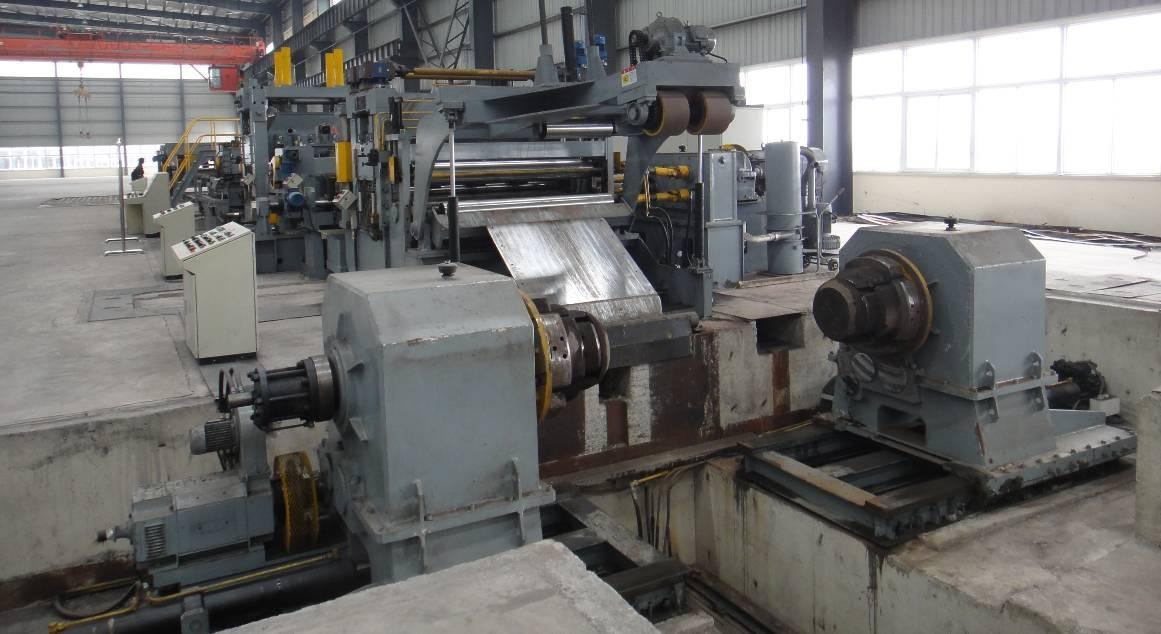
A state-of-the-art Steel Tube Production Line usually consists of a number of complementary units aimed at ensuring the highest production rate possible along with high product quality. The initial stage of production is coil preparation, which involves the use of a Slitting Line where wide steel coils are slit into strips of the desired width used for tube manufacturing.
This allows decreasing material consumption and increasing consistency in the course of the production process.
A number of facilities have additional lines known as Cut-to-Length Lines, which improve the efficiency of material handling when making flat steel products in addition to welded tubes.
Digital monitoring has become very crucial for manufacturing companies doing business in Saudi Arabia and the UAE. Through today’s control systems, operators are able to monitor production speed, welding conditions, roll alignment, energy use and the performance of machines in real time. This is useful in improving process control, while also enabling predictive maintenance techniques that help reduce unplanned downtime.
Due to rising labor costs and quality requirements in the GCC, manufacturing companies investing in fully automated production processes tend to have higher productivity and lower operating costs than those using old machinery.
Why Buyers Are Looking Beyond Low-Cost Equipment
The ERW Tube Mill Middle East market has become increasingly competitive, with manufacturers receiving quotations from suppliers across Asia, Europe and other international markets. While purchase price remains an important consideration, it is no longer the only factor influencing investment decisions.
Many first-time buyers naturally focus on reducing capital expenditure. However, experienced manufacturers understand that an ERW Tube Mill is a long-term production asset expected to operate reliably for twenty years or more. During that period, tooling quality, production efficiency, spare parts availability, technical support, software upgrades, maintenance requirements and energy consumption often have a greater impact on profitability than the initial purchase price.
Lower-cost equipment may require more frequent roll replacement, longer setup times, increased maintenance and higher labour input. Even small reductions in production efficiency can result in significant losses over thousands of operating hours each year.
For this reason, manufacturers evaluating an ERW Tube Mill Saudi Arabia or ERW Tube Mill UAE investment increasingly compare suppliers based on total cost of ownership rather than simply comparing quotations.
Important evaluation criteria include:
- Engineering quality and machine rigidity
- Roll tooling life and replacement costs
- Automation capability
- Production speed and stability
- HF welding performance
- Spare parts availability
- Commissioning and installation support
- Operator training
- Remote technical assistance
- Future upgrade capability
- Energy efficiency
- Service response times
Manufacturers taking this broader approach often achieve lower operating costs, higher equipment availability and stronger long-term returns on investment.
Planning for Future Expansion
One of the most common challenges faced by growing manufacturers is selecting equipment based solely on current production requirements.
Infrastructure development across Saudi Arabia and the UAE is expected to continue for many years, creating sustained demand for structural steel tubes, industrial pipe and precision tubing. Manufacturers investing today should therefore consider not only immediate production requirements but also future expansion plans.
Selecting an ERW Tube Mill Middle East line with sufficient capacity for future growth can often eliminate the need for costly upgrades within only a few years. Likewise, investing in automation, digital controls and compatible downstream equipment during the initial installation generally proves more economical than retrofitting these systems after production has begun.
Businesses planning to supply multiple industries may also benefit from choosing equipment capable of producing a wider product range rather than specialising in a single application. This provides greater flexibility to respond to changing market conditions while supporting long-term business growth.
The Outlook for the ERW Tube Mill Middle East Market
The long-term outlook for the ERW Tube Mill Middle East market remains highly positive.
Saudi Arabia’s Vision 2030 continues to drive investment across infrastructure, manufacturing, logistics, renewable energy, mining and industrial development, while the UAE is strengthening its position as one of the region’s leading manufacturing and export hubs through Operation 300bn and ongoing industrial expansion.
Together, these initiatives are creating sustained demand for welded steel tubes used in commercial construction, industrial facilities, transportation infrastructure, oil and gas, water transmission, renewable energy and advanced manufacturing.
As more projects move into execution, manufacturers will require reliable ERW Tube Mill solutions capable of delivering consistent quality, high productivity and the flexibility to produce a broad range of tube sizes and profiles.
For businesses evaluating an ERW Tube Mill Saudi Arabia, ERW Tube Mill UAE or wider ERW Tube Mill Middle East investment, the most successful procurement decisions will be based on long-term production capability rather than headline purchase price. Careful consideration of engineering quality, automation, tooling performance, technical support and lifetime operating costs will help manufacturers build competitive operations capable of supporting the GCC’s next phase of industrial growth.
At Forever Machinery, we work with manufacturers around the world to develop complete steel tube production solutions tailored to specific production requirements. Our portfolio includes ERW Tube Mills, API Tube Mills, Precision Tube Mills, Direct Forming Lines, Slitting Lines, Cut-to-Length Lines and comprehensive after-sales support designed to maximise equipment performance throughout its operating life.
If you are planning to establish or expand steel tube manufacturing in Saudi Arabia, the UAE or the wider GCC region, sharing your production specifications, including tube dimensions, wall thickness, steel grades, production capacity and automation requirements, allows us to recommend the most suitable equipment configuration for your long-term manufacturing objectives.
Frequently Asked Questions
Q1: Why is demand for ERW tube mills growing in Saudi Arabia and the UAE?
Demand is rising fast because both Saudi Arabia and the UAE are pushing forward with big economic diversification plans. Saudi Arabia’s Vision 2030 and the UAE’s Operation 300bn are driving large-scale investments in steel manufacturing. These efforts focus on building industries to support major infrastructure projects like NEOM, Qiddiya, new airports, energy pipelines, utility systems and solar farms. The goal is to reduce dependence on imported steel and boost production.
Q2: What key industries in the GCC rely on ERW welded steel tubes?
ERW (Electric Resistance Welded) steel tubes and hollow sections are vital across growing industries in the Gulf Cooperation Council region. These include:
- Infrastructure & Construction: Used in frames for buildings, warehouses, logistics hubs and security fencing.
- Oil, Gas & Energy: Applied in process piping, utility lines, refinery structures and API line pipe.
- Renewable Energy: Needed for mounting structures and cable supports in solar power installations.
- Water & Utilities: Used in desalination plants and regional fluid transport networks.
Q3: Which ERW tube mill models are best suited for construction vs. heavy infrastructure projects?
The right ERW tube mill depends on the size and complexity of the project. For construction tasks, flexible models like ERW60, ERW76, ERW89 and ERW114 work well. They can quickly produce round, square and rectangular hollow sections at high speeds. For heavy-duty applications such as energy pipelines or large infrastructure, larger capacity mills such as ERW168, ERW219 or specialized API Tube Mills are required. These handle thick-walled, large-diameter tubes under high pressure.
Q4: How does Direct Forming Line technology benefit GCC tube manufacturers?
Direct Forming Line technology lets manufacturers make square and rectangular sections directly from steel strip without first forming a round tube. This cuts down on roll tooling needs, reduces changeover time between sizes and improves flexibility. Plants that switch frequently between section sizes benefit greatly from this faster and more adaptable setup.
Q5: What quality certifications must ERW tube mills meet in the Middle East?
Tubes made for government projects, multinational engineering firms and energy companies need to meet international standards. Key certifications include API 5L for line pipe and various ASTM/EN specifications for mechanical tubing. To comply, mills must have HF welding systems, accurate sizing equipment, flying cutoffs and integrated non-destructive testing (NDT) setups to ensure weld quality and dimensional accuracy.
Q6: Why should buyers look beyond machine cost when investing in an ERW tube mill?
An ERW tube mill lasts more than twenty years and is a long-term investment. Focusing on the purchase price can lead to higher costs over time. Low-cost machines often cause problems such as tool wear, misalignment issues, longer downtime during changeovers, higher power use, unstable welding, increased scrap rates and limited access to spare parts or technical help. Considering the cost of ownership gives a clearer picture of real operating expenses.
Q7: What complementary machinery is required for a Steel Tube Production Line?
A full steel tube production line includes more than the ERW tube mill. Essential supporting equipment includes:
- Slitting Lines: To cut master coils into specific strip widths.
- Cut-to-Length Lines: For processing sheet metal along with tube manufacturing.
- Coil Handling & Uncoilers: Automated systems to feed material continuously and keep operations running without stops.
- Inspection & Hydrotesting Systems: To check weld integrity, pressure resistance and dimensional accuracy before shipments.
Related Reading
- Middle East ERW Tube Mill
- Choosing the Right ERW Tube Mill: A Practical Guide for Manufacturers
- Direct Forming vs Conventional Forming: Key Differences, Benefits and Applications
- ERW versus Seamless Pipe Manufacturing: Which One Is Appropriate for Your Project?
- High Frequency Welding Explained: Process, Benefits and Applications
- ERW Tube Mill Pricing in Europe and the UK: 2026 Buyer’s Guide